Every WÜSTHOF Knife Blade, Explained
While a single, sharp chef’s knife or santoku can take care of most prep – especially one as hard-wearing and versatile as a WÜSTHOF Chef’s Knife – using a knife specifically engineered for the ingredient in front of you makes the process run a lot smoother. That’s why we broke down the basics of every WÜSTHOF blade we carry at Borough Kitchen, how to use it, and what ingredients it is most suited for.
German stainless steel knives like WÜSTHOF are known for being robust. They can withstand impact with tough ingredients, like bones and seeds, with little risk of chipping, and are easy to sharpen and care for. (To read more about the difference between Western and Japanese knives, see our guide.)
Built to Last: Why We Love WÜSTHOF Knives
Before choosing your blades, it is worth understanding what sets a WÜSTHOF knife apart. Made in Germany, WÜSTHOF blades undergo a state-of-the-art laser cutting process called PEtec (Precision Edge Technology). This process calculates the exact optimal angle for each specific blade, producing an edge that is 20% sharper out of the box than standard non-PEtec German knives, with double the edge retention. We also love how WÜSTHOF has mastered blade-to-handle balance, so every knife feels comfortable in your hand. These are knives that are built to last for decades, and up to a lifetime.
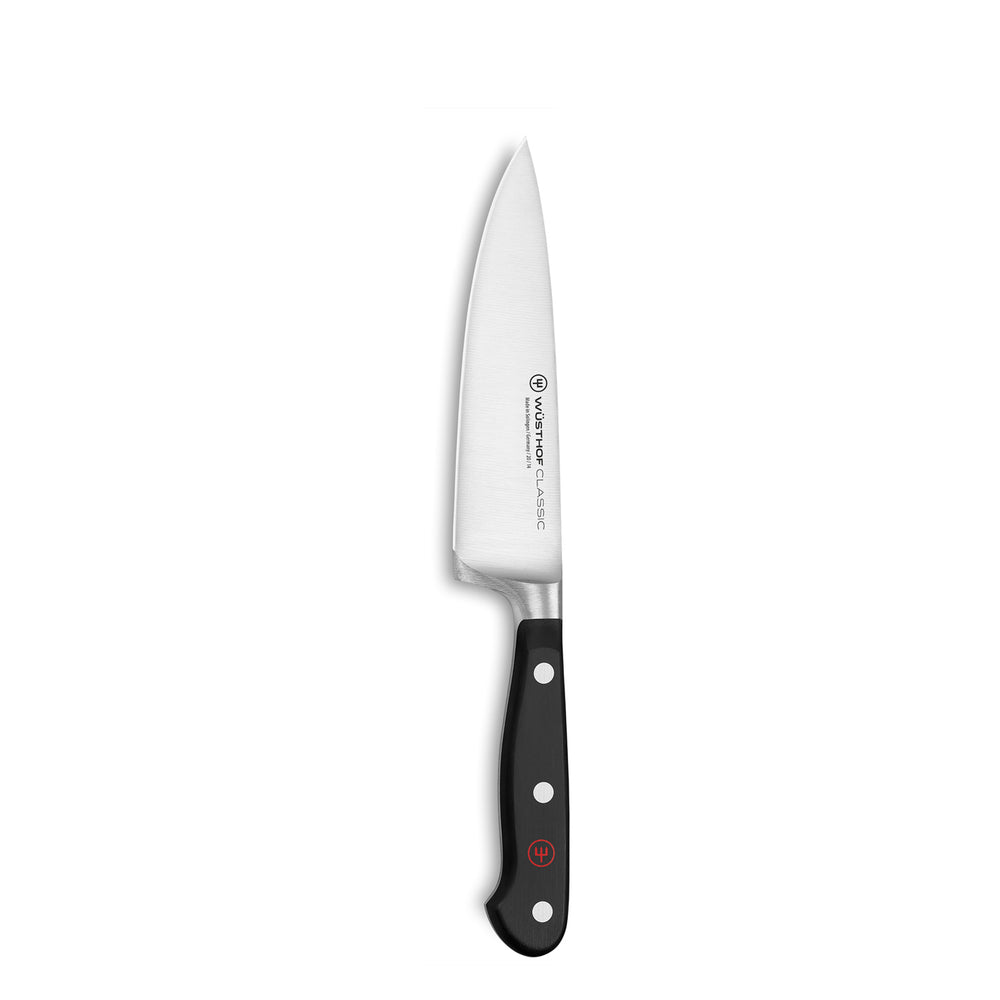
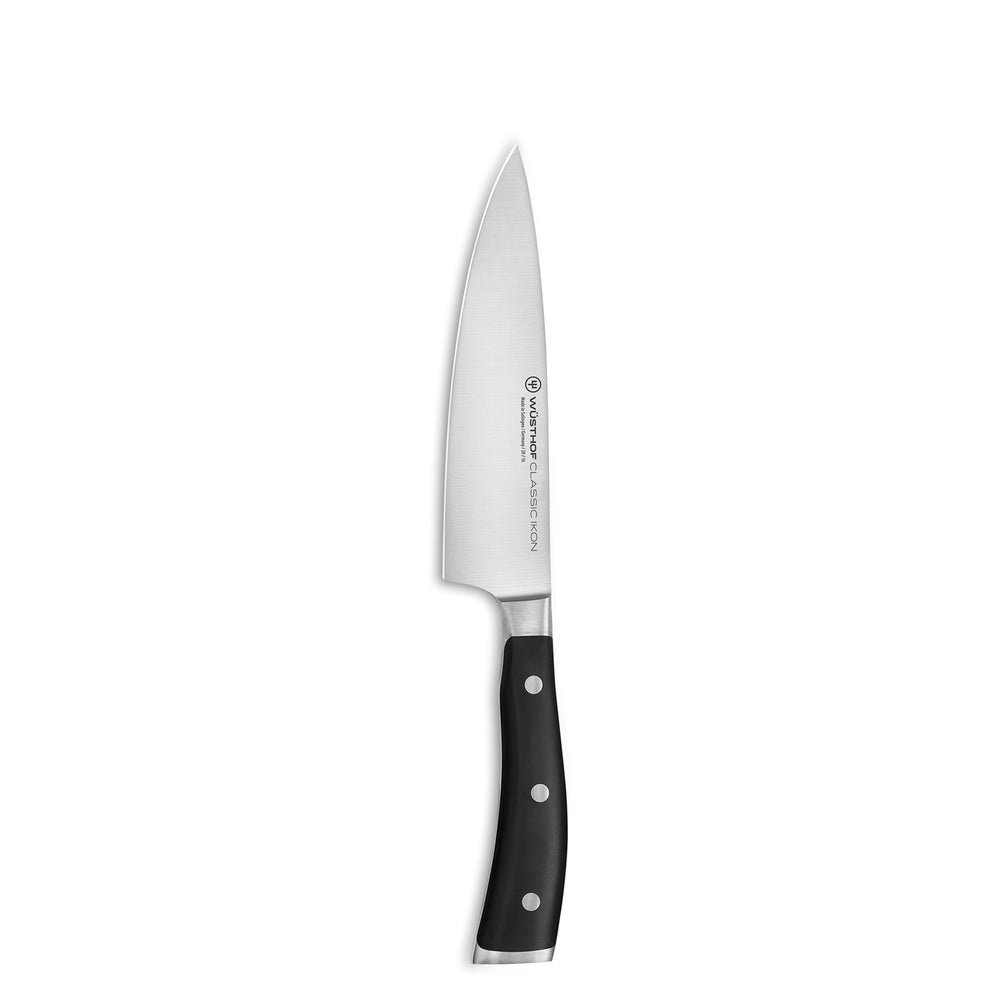
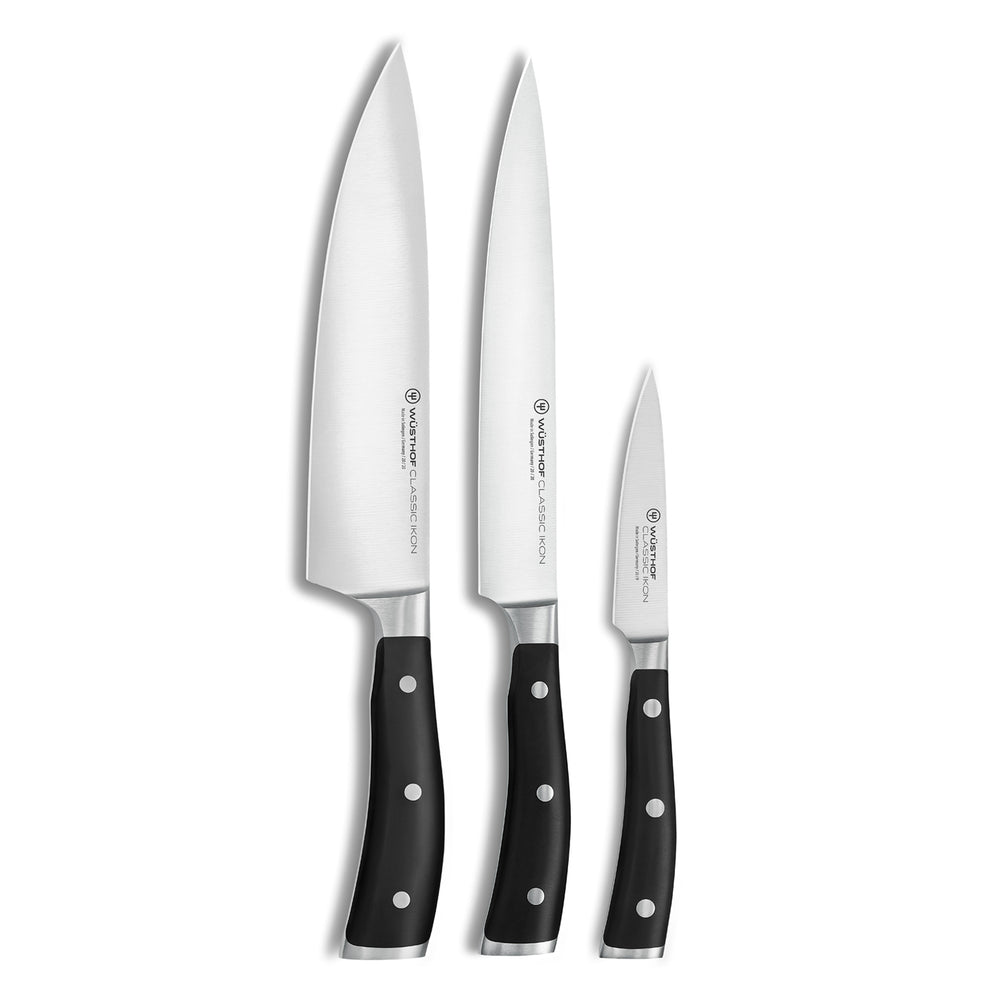
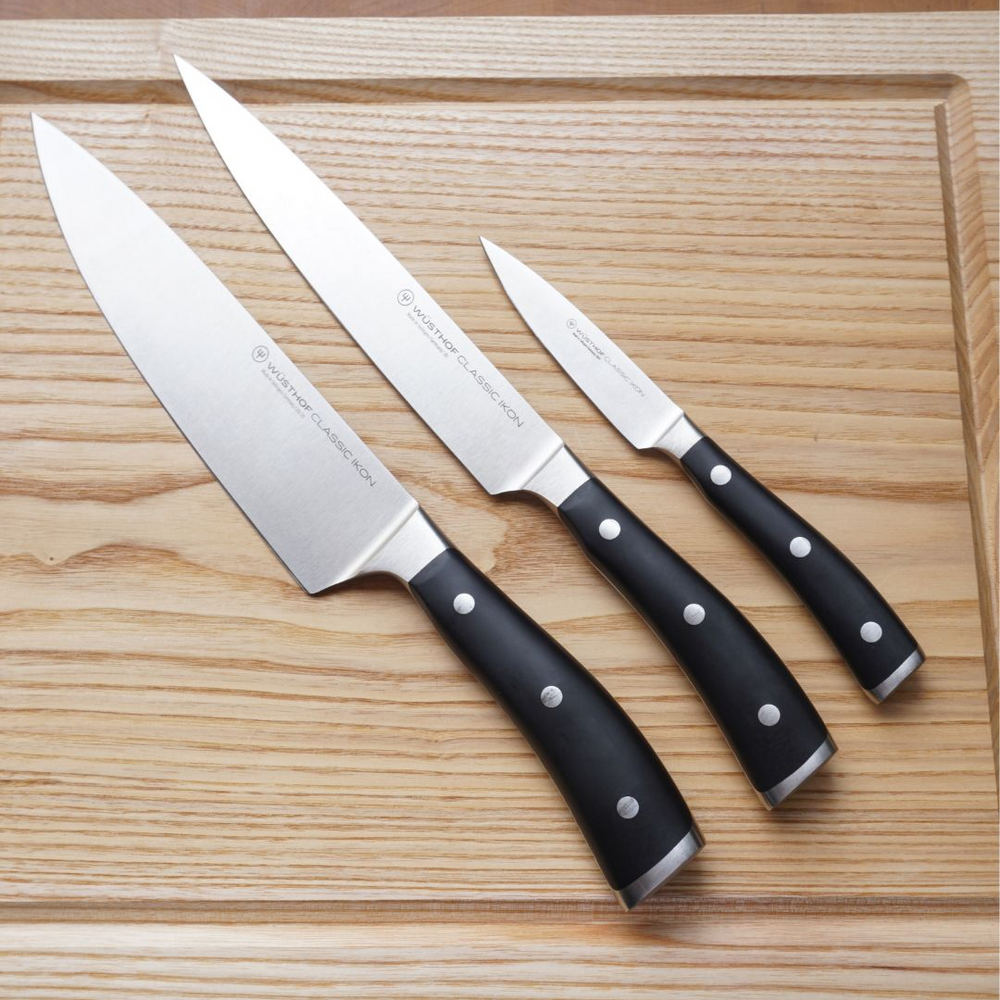
The WÜSTHOF knife ranges we carry are the WÜSTHOF Classic and WÜSTHOF Classic Ikon. Both are excellent, and very similar – with the same quality, metal, and PEtec technology. The key difference between them is the bolster: the small bit of metal at the bottom edge of the knife. The Classic has a traditional full bolster, while the Classic Ikon has a half-bolster. The full bolster provides more support and safety when pinch-gripping the knife, but as a result, the blade cannot be sharpened to the same angle from the top to the bottom of the blade. This makes the Classic range slightly less high-performing and durable than the Classic Ikon range.
To read more about the difference between the WÜSTHOF Classic and WÜSTHOF Classic ranges, read our guide.
The WÜSTHOF knife ranges we carry are the WÜSTHOF Classic and WÜSTHOF Classic Ikon. Both are excellent, and very similar – with the same quality, metal, and PEtec technology. The key difference between them is the bolster: the small bit of metal at the bottom edge of the knife. The Classic has a traditional full bolster, while the Classic Ikon has a half-bolster. The full bolster provides more support and safety when pinch-gripping the knife, but as a result, the blade cannot be sharpened to the same angle from the top to the bottom of the blade. This makes the Classic range slightly less high-performing and durable than the Classic Ikon range.
To read more about the difference between the WÜSTHOF Classic and WÜSTHOF Classic ranges, read our guide.

Essential Everyday Knives
These are the blade shapes that come in handy for most food prep, from chopping onions to coring fruit. They include classic shapes like a Chef’s Knife, as well as the unique Asian Utility Knife (loved by the BK team for doing the work of a Paring and Utility knife in one shape).

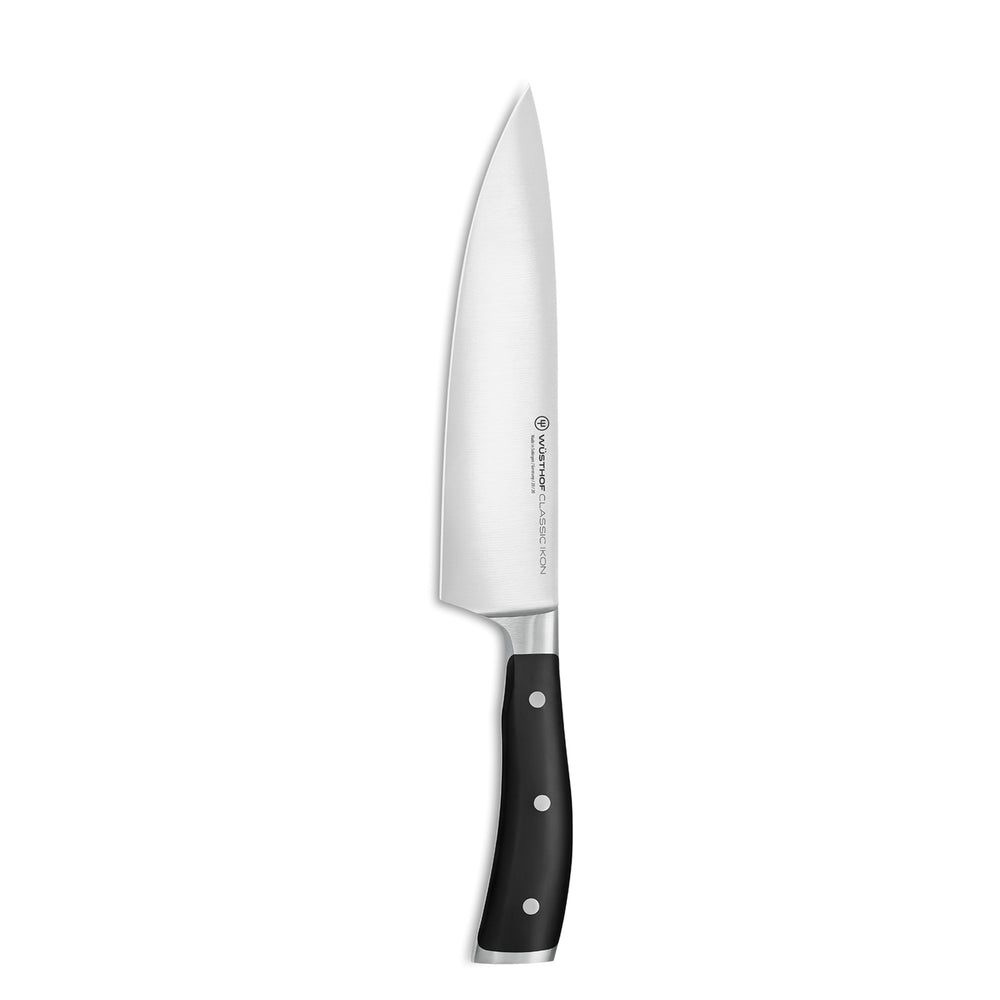
WÜSTHOF Chef’s Knife
The undisputed workhorse of the kitchen. Designed to handle roughly 80% of daily food preparation, it offers exceptional balance and a weight that does much of the heavy lifting for you.
-
Shape: Broad, gently curved blade engineered for weight and balance against the board.
-
Cutting Technique: Anchor the tip of the blade to the cutting board and pivot smoothly in a continuous rocking motion across ingredients.
- Best For: Heavy-duty prep – dicing dense root vegetables, mincing herbs, and slicing large cuts of boneless meat.
Shop WÜSTHOF Chef’s Knives.

WÜSTHOF Santoku Knife
The Japanese-inspired equivalent to the Western Chef’s Knife. It is lighter with a thinner spine, favoured by cooks who prefer an agile, precise feel over weighted momentum.
-
Shape: Flat edge with a rounded tip along the blade, with air pockets along the blade to minimise friction and prevent food sticking.
-
Cutting Technique: Chop in a vertical push-cut motion with clean, swift up-and-down strokes without rocking the blade.
- Best For: Precision prep, fine dicing, and paper-thin slicing of vegetables, soft proteins, and delicate fish.
Shop WÜSTHOF Santoku Knives.

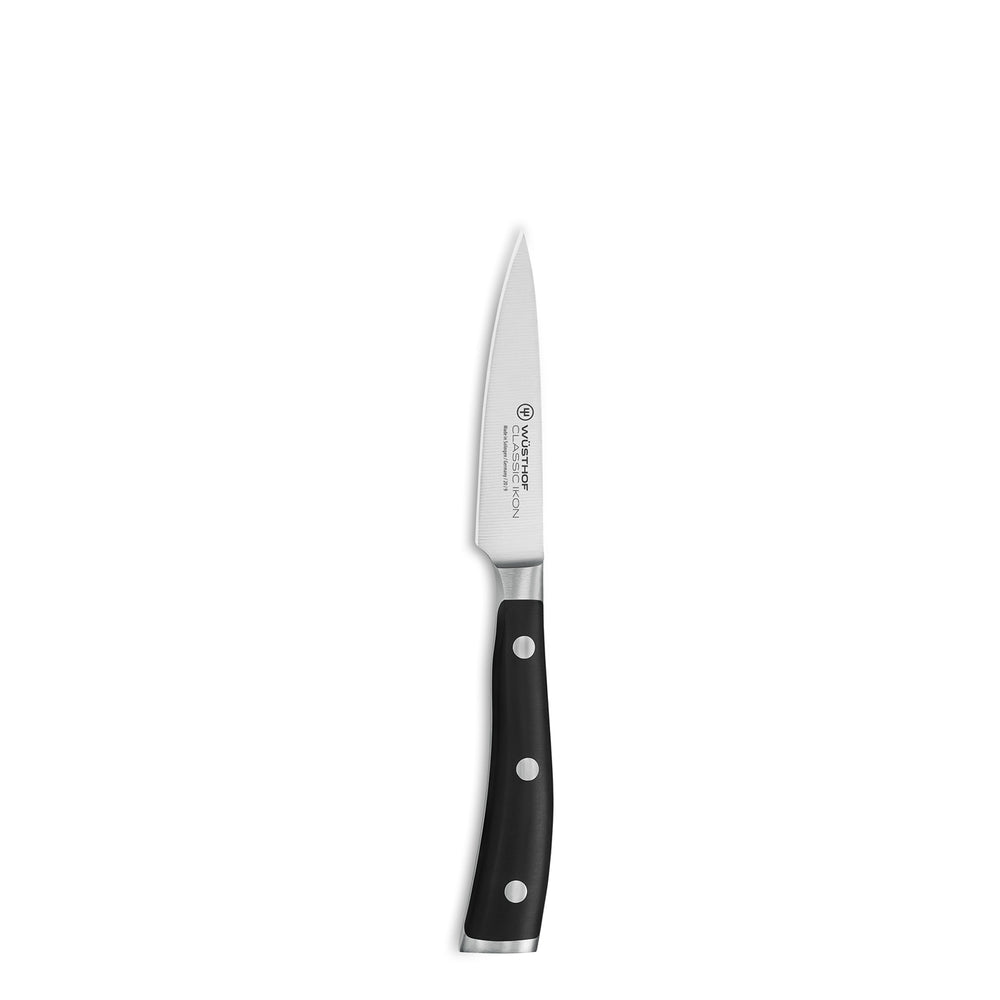
WÜSTHOF Paring Knife
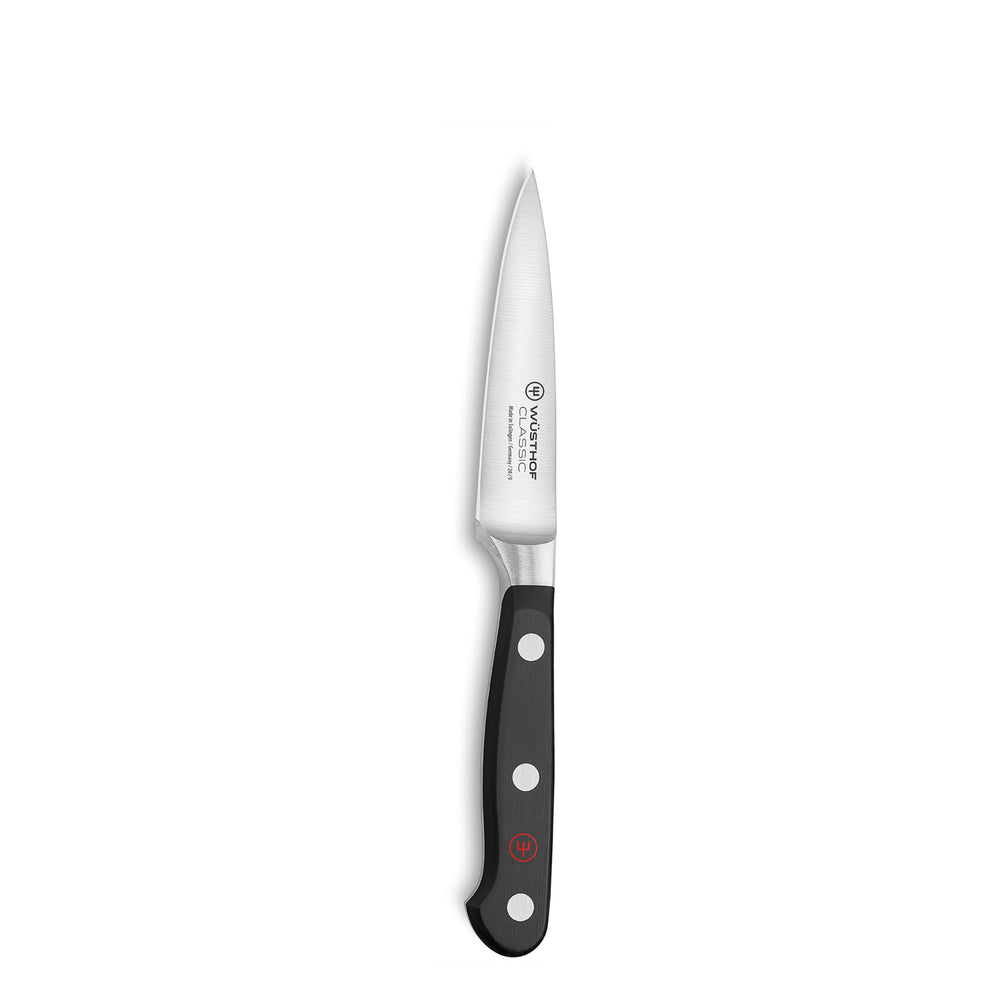
Where the Chef’s knife is built for board work, the Paring Knife is engineered for tasks where a larger blade would be cumbersome.
-
Shape: Short, slender blade tapering to a sharp tip, designed for close control.
-
Cutting Technique: Highly adaptable. Use off the board to peel or trim towards the thumb, or work directly on the board with push-cuts and slices.
- Best For: Intricate detail work – peeling fruit, trimming herbs, coring tomatoes, and deveining prawns.
Shop WÜSTHOF Paring Knives.

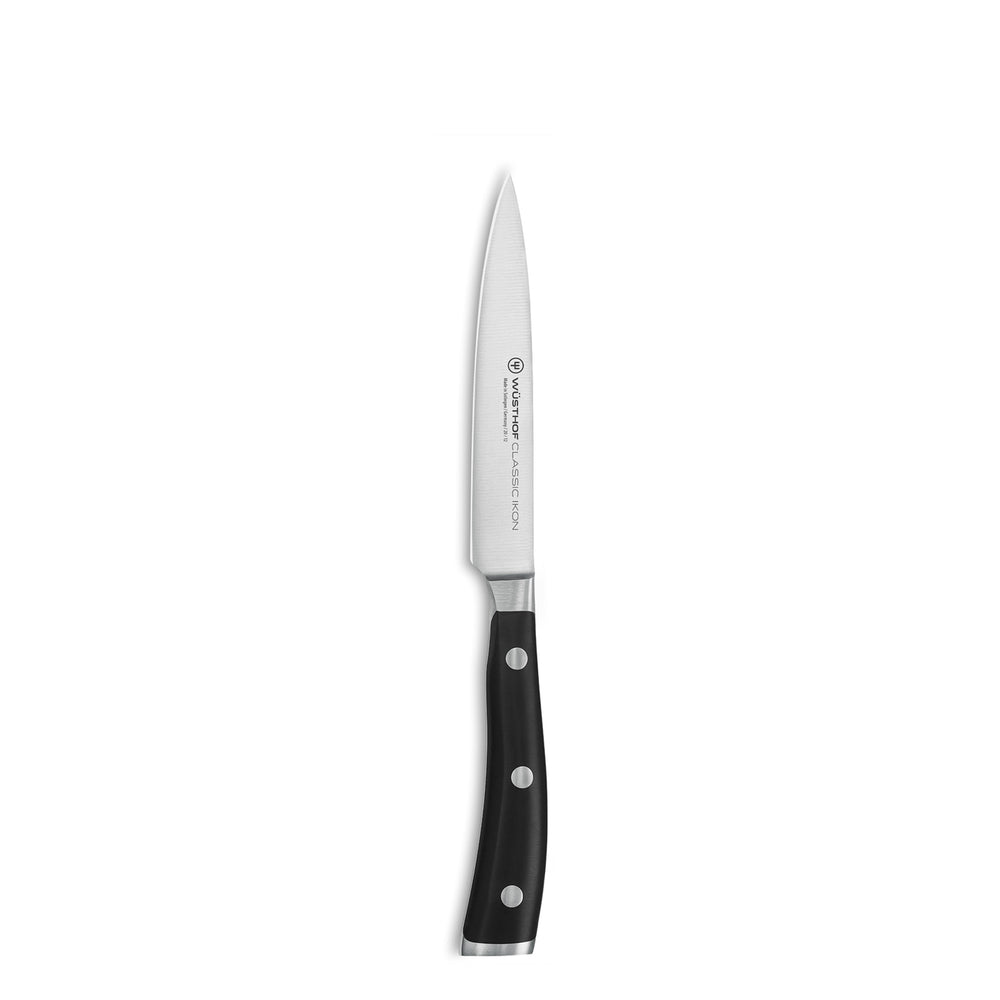
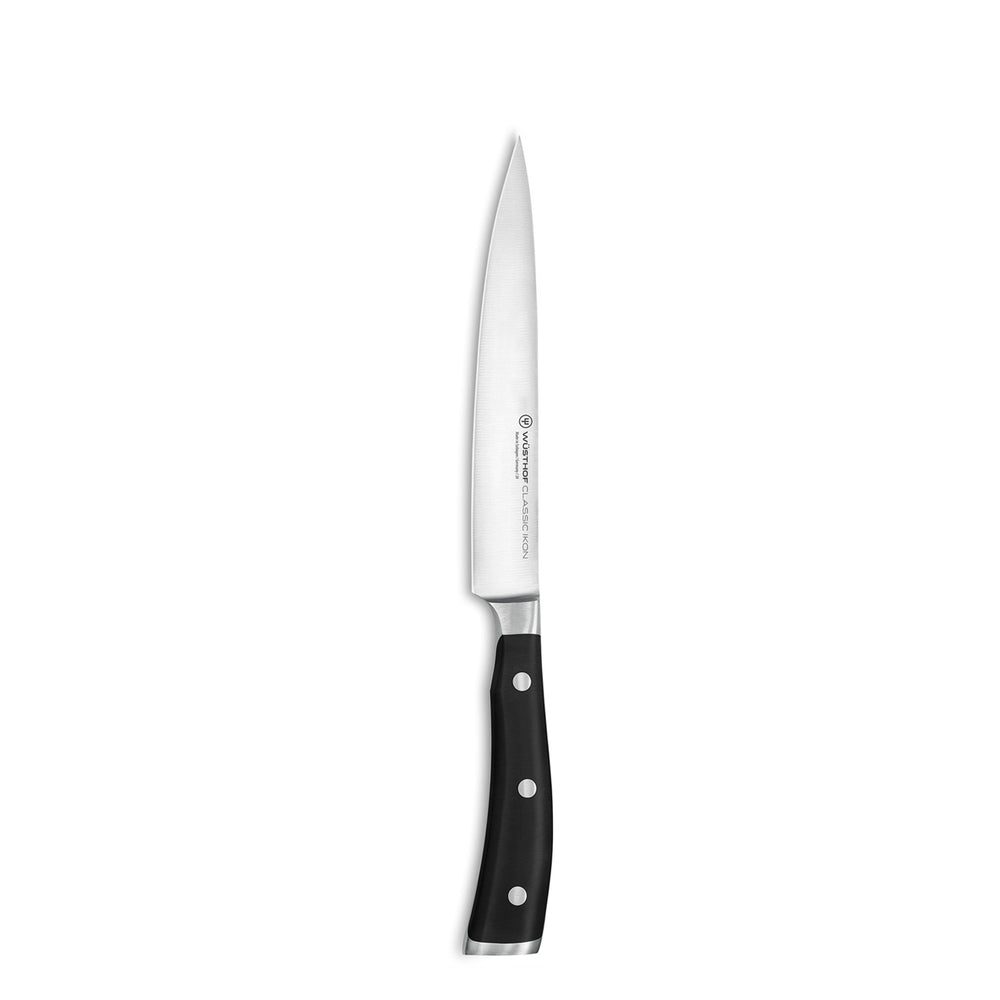
WÜSTHOF Utility Knife
The functional bridge between a paring knife and a chef’s knife. Reach for this when a chef’s knife is too large, but a paring knife lacks the necessary length.
-
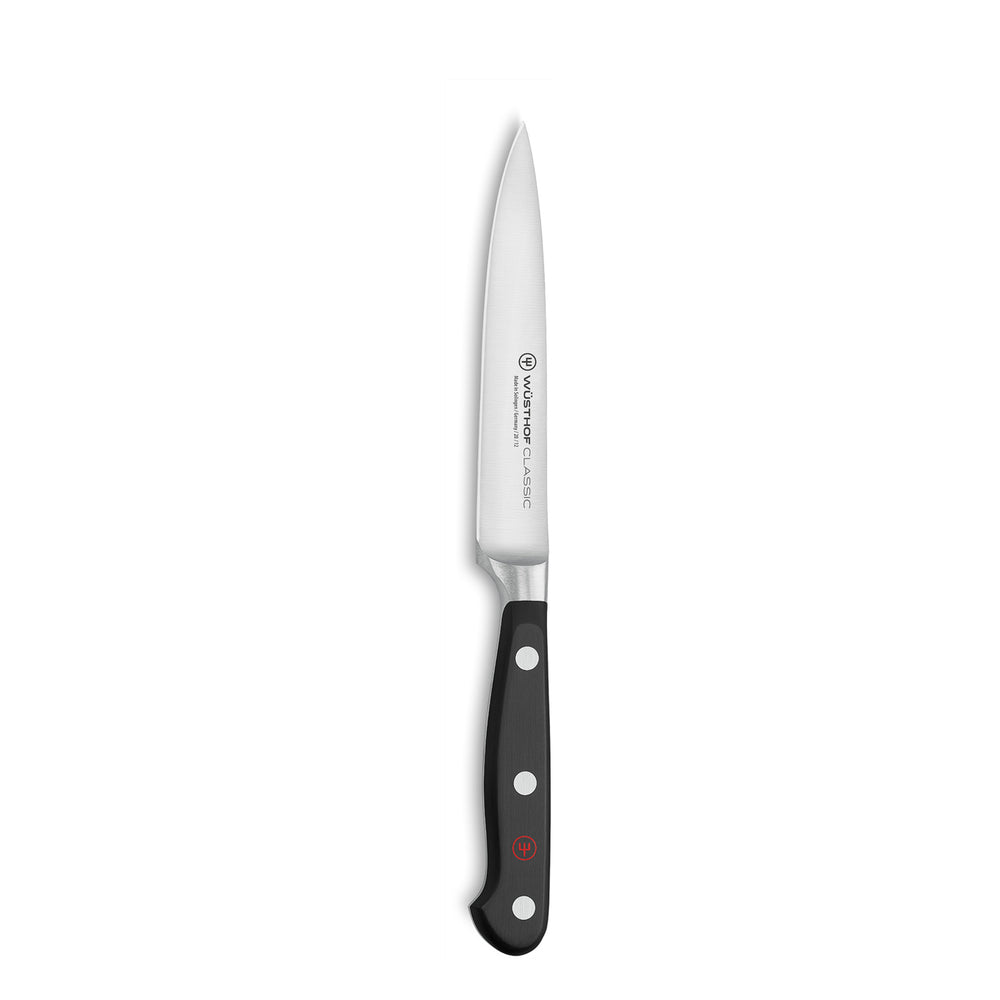
Shape: Mid-length, narrow blade offering greater dexterity than a chef’s knife and more reach than a paring knife.
-
Cutting Technique: Draw the blade through ingredients using smooth, full-length strokes on the cutting board.
- Best For: Mid-sized ingredients requiring clean precision, such as slicing citrus, trimming charcuterie, and halving avocados.
Shop WÜSTHOF Utility Knives.

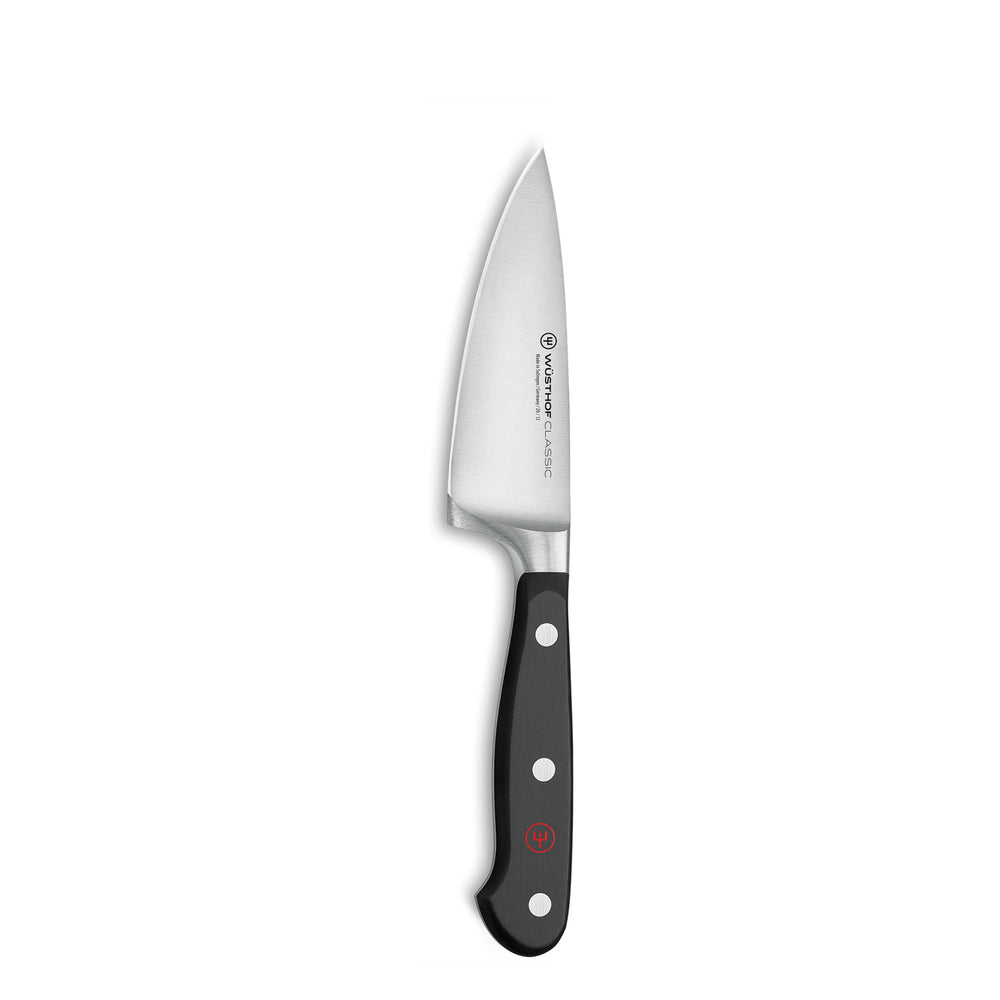
WÜSTHOF Asian Utility Knife
This is a German take on a Japanese kiritsuke knife, sitting comfortably somewhere between a paring knife and a utility knife.
-
Shape: Features the length of a utility knife with the slant of a paring knife. The 12cm blade has a uniquely curved straight-edge with a wider profile for maximum control and a pointed tip for intricate detail work.
-
Cutting Technique: Highly agile for close hand work, while the curved edge allows for low rocking cuts that require moderate heft and precise balance.
- Best For: Fruit, vegetables, cheese, herbs, and small to medium ingredients, as well as precision trimming of meats and poultry.
Shop WÜSTHOF Asian Utility Knives.

Serrated & Curved Knives
Serrated edges feature sharp teeth designed to saw through foods with tough outer surfaces and soft interiors, preventing the foods from crushing. Note that serrated knives cannot be sharpened – all the more reason to invest in a high-quality one.

WÜSTHOF Double-Serrated Bread Knife
A proper bread knife requires length and deep serrations to cut through tough artisanal crusts without tearing soft crumb structures.
-
Shape: Long, sturdy blade featuring both large scalloped indentations as well as smaller, finer serrations.
-
Cutting Technique: Use long, full-length sawing strokes with very light downward pressure, letting the teeth cut cleanly through the crust without squishing the interior.
- Best For: Crusty sourdough, soft brioche, cakes, and hard-skinned fruits like pineapple or melon.
Shop WÜSTHOF Bread Knives.

WÜSTHOF Serrated Utility Knife
Unlike a standard utility knife, this blade features fine, sharp serrations designed to pierce tough outer skins without squishing delicate interiors.
-
Shape: Mid-length, narrow blade with a finely scalloped serrated edge.
-
Cutting Technique: Apply a gentle, sawing motion with minimal downward pressure, allowing the serrations to pierce tough skins cleanly.
- Best For: Slicing ripe tomatoes, crusty bread rolls, citrus fruits, stuffed pastries, and cured sausages.
Shop WÜSTHOF Serrated Utility Knives.

WÜSTHOF Peeling Knife
This specialty knife – also called a 'bird’s beak knife' – makes easy work of peeling rounded fruits and vegetables.
-
Shape: Short curved blade mimicking the natural curve of fruit and vegetables.
-
Movement: Following the curve of the ingredient, under the peel, while rotating in the hand.
- Best For: Peeling potatoes, apples, and other rounded fruit and veg, and creating garnishes.
Shop WÜSTHOF Peeling Knives .

Meat, Fish & Butchery Knives
When preparing meat, poultry, and fish, certain specialty blades are great for working around skin and bones.

WÜSTHOF Craftsman Knife
A versatile hybrid blade drawing inspiration from the chef’s knife, boning knife, and cleaver. It is engineered for cooks who frequently work with whole proteins and hardy produce.
- Shape: A distinctive wide blade featuring a pronounced clipped point and a subtle notch near the heel for finger leverage.
- Cutting Technique: Rock or push-cut through tough produce, or use the narrow tip of the blade for precise butchery and trimming.
- Best For: Butchering poultry, trimming fat caps, carving cooked meats, and tackling tough, thick-skinned squash.
Shop WÜSTHOF Craftsman Knives.

WÜSTHOF Boning Knife
Designed specifically for butchery, this rigid blade offers the firmness needed to maneuver along bone structures without slipping.
-
Shape: Narrow, rigid, unyielding blade with a sharp, upward-curved tip.
-
Cutting Technique: Pierce flesh with the tip and guide the blade along bone contours, joint sockets, and connective tissue.
- Best For: De-boning poultry, removing meat from ribs or chops, and trimming stubborn silverskin from beef or lamb fillets.
Shop WÜSTHOF Boning Knives.

WÜSTHOF Flexible Fish Filleting Knife
Unlike the rigid boning knife, the filleting knife prioritises spring and flexibility to navigate delicate fish structure without tearing.
-
Shape: Long, slim, highly flexible blade designed to yield under pressure.
-
Cutting Technique: Apply light downward pressure to flex the blade flat against skin or bone, gliding in smooth, sweeping strokes along the length of the fish.
- Best For: Preparing whole fish – gliding effortlessly along the backbone to separate flesh, lift skin, and yield clean fillets.
Shop WÜSTHOF Fish Filleting Knives.

WÜSTHOF Carving Knife (and Carving Sets)
A long, narrow profile reduces drag when slicing cooked roasts, keeping juices inside the meat rather than on the board.
-
Shape: Long, slender, rigid blade with a razor-sharp straight edge. Often paired in a WÜSTHOF Carving Set with a sturdy two-prong carving fork to hold joints securely in place while slicing.
-
Cutting Technique: Secure the roast using the carving fork in your non-dominant hand, then make long, continuous, single-draw slicing motions across the grain.
- Best For: Serving neat, uniform slices of roast beef, turkey, leg of lamb, or glazed ham.
Shop WÜSTHOF Carving Knives & Sets.

WÜSTHOF Cleaver
A cleaver relies on momentum and brute strength rather than precision.
-
Shape: Large, thick, heavy rectangular blade with a solid spine and substantial heft.
-
Cutting Technique: Lift from the wrist and forearm, using firm, controlled downward chopping actions to let the blade's weight drive through heavy bones and joints.
- Best For: Splitting thick bones, jointing poultry, cracking lobster shells, and crushing whole garlic cloves with the flat side of the blade.
Shop WÜSTHOF Cleavers.
Frequently Asked Questions
What is the difference between a WÜSTHOF Boning Knife and a Filleting Knife?
While both handle protein prep, a boning knife is designed for meat and poultry. It features a rigid, unyielding blade designed to break down dense meat and trace along hard animal bones. A filleting knife is designed for fish. It is thin and flexible, which allows it to bend around the delicate bones of fish without tearing the delicate flesh.
Why do I need a Carving Set instead of just using a Chef’s Knife?
A chef’s knife is wider and creates more drag, which can crush cooked muscle fibres and squeeze out juices when carving meat. A dedicated carving knife's narrow profile glides cleanly through roasts. Paired with a carving fork, it keeps your hands safe and holds the joint firm for uniform, presentable slices.
How do I care for my serrated WÜSTHOF blades?
Serrated blades (like bread and serrated utility knives) cannot be sharpened at home. While they can be professionally sharpened, this tends to be unnecessary, as serrated knives are designed to be sharper for much longer than a straight-edged knife. However, they should still be hand-washed immediately after use and dried thoroughly.
While both handle protein prep, a boning knife is designed for meat and poultry. It features a rigid, unyielding blade designed to break down dense meat and trace along hard animal bones. A filleting knife is designed for fish. It is thin and flexible, which allows it to bend around the delicate bones of fish without tearing the delicate flesh.
Why do I need a Carving Set instead of just using a Chef’s Knife?
A chef’s knife is wider and creates more drag, which can crush cooked muscle fibres and squeeze out juices when carving meat. A dedicated carving knife's narrow profile glides cleanly through roasts. Paired with a carving fork, it keeps your hands safe and holds the joint firm for uniform, presentable slices.
How do I care for my serrated WÜSTHOF blades?
Serrated blades (like bread and serrated utility knives) cannot be sharpened at home. While they can be professionally sharpened, this tends to be unnecessary, as serrated knives are designed to be sharper for much longer than a straight-edged knife. However, they should still be hand-washed immediately after use and dried thoroughly.