







It is very difficult to capture the taste of an authentic Chinese stir-fry without a wok. The wide, flared shape makes it easy to stir and toss ingredients, while reducing sauces to a thick consistency.
Woks are also traditionally made with carbon steel, as this material gets very hot very quickly, and retains that high temperature. This has two benefits: It allows food to cook very quickly, retaining colour and crunch, while imparting a unique smokiness called ‘wok hei’. Traditionally, woks also have a rounded base, but all the woks we carry have flat bases for the sake of compatibility with all hobs including induction.
We carry carbon steel woks and recommend that material for the most rewarding experience. However, carbon steel pans must be regularly seasoned and maintained. (To read about how to season a carbon steel pan, read our guide here.) For more ease, we recommend multi-ply stainless steel woks or enamelled cast iron woks. Non-stick woks are the easiest to maintain, but don’t stand up well to high heat and have a limited life span (10 years, with proper care). Carbon steel, cast iron, and stainless steel woks, on the other hand, are built to last a lifetime.
Best Material for a Wok: Carbon Steel or Spun Iron
Carbon steel woks are the standard material for woks, but spun iron is a good, easier-to-maintain alternative, as it has the quick heat-responsiveness of carbon steel, but comes pre-seasoned. (You still need to season and maintain a spun iron wok, but the process is more foolproof.)
-
Spring Canton Carbon Steel Wok: Made from robust Nitri-Black carbon steel that has been treated at a high temperature, the material of the wok has significantly less reaction to air and water. Thanks to the nitriding heat treatment, the carbon steel is far more resistant to rust, scratches, and dirt than normal carbon steel, and develops a natural non-stick effect over time and use. It features a wooden handle that stays cool as you cook. Its thick gauge prevents warping on powerful induction zones while providing the searing heat needed for wok hei. Shop here.
-
Netherton Foundry Spun Iron Wok: Handmade in Shropshire, England this black iron wok is pre-seasoned with flax oil. It’s slightly thicker than standard carbon steel, offering superb heat retention while remaining lighter than cast iron. The oak handle stays cool and looks beautiful. Be mindful when heating spun iron, as it is a more delicate material than cast iron, and can warp if not heated properly – especially on induction hobs. Start with a low heat and increase to high. Shop here.
-
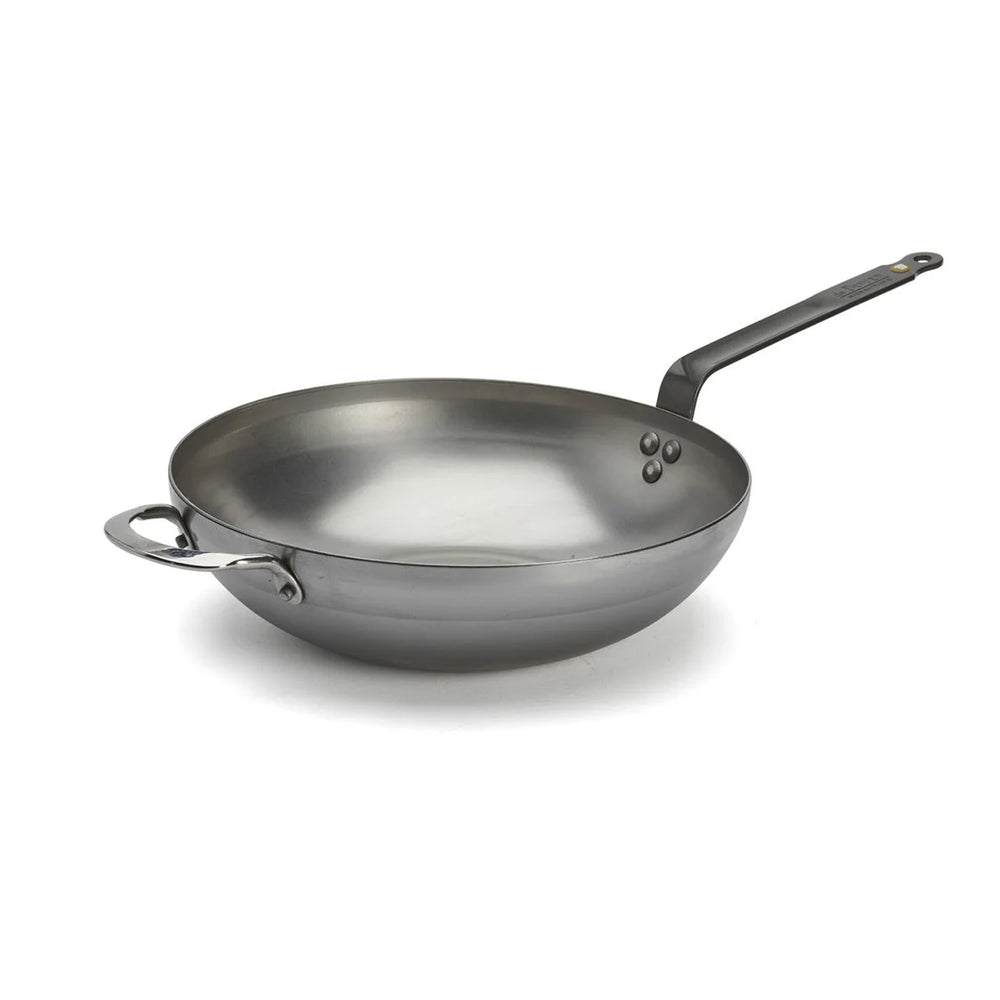
De Buyer Mineral B Wok: The wok version of our best-selling De Buyer Mineral B Carbon Steel Pan, this material is beloved for its extreme durability. It is heavier than the standard wok. Shop here.
- Professional Carbon Steel Wok: Our best-of-value choice for a wok – lightweight, heat-responsive, and induction-compatible. Shop here.
Low-Maintenance Woks: Enamelled Cast Iron, Stainless Steel, Non-Stick
If you want a wok but are hesitant to invest in a pan that needs to be seasoned and regularly cared for, consider these alternatives.
-
Cast Iron: Cast iron, unlike carbon steel and spun iron, is thicker – while it can hold on to high heat, it is not as quick to respond to temperatures. It is also heavier, therefore more difficult to lift and shake the pan, as is traditional for a stir-fry. For this reason, most cast iron woks have two handles rather than one, as they are designed to not be moved very much. Like carbon steel, cast iron woks need seasoning – however, enamelled cast iron woks do not, as they have an enamelled layer that prevents the pan from rust. They will also not impart the same smoky flavour as a carbon steel, spun iron, or uncoated cast iron pan. All our enamelled cast iron woks are made by Staub. Shop cast iron woks here.
-
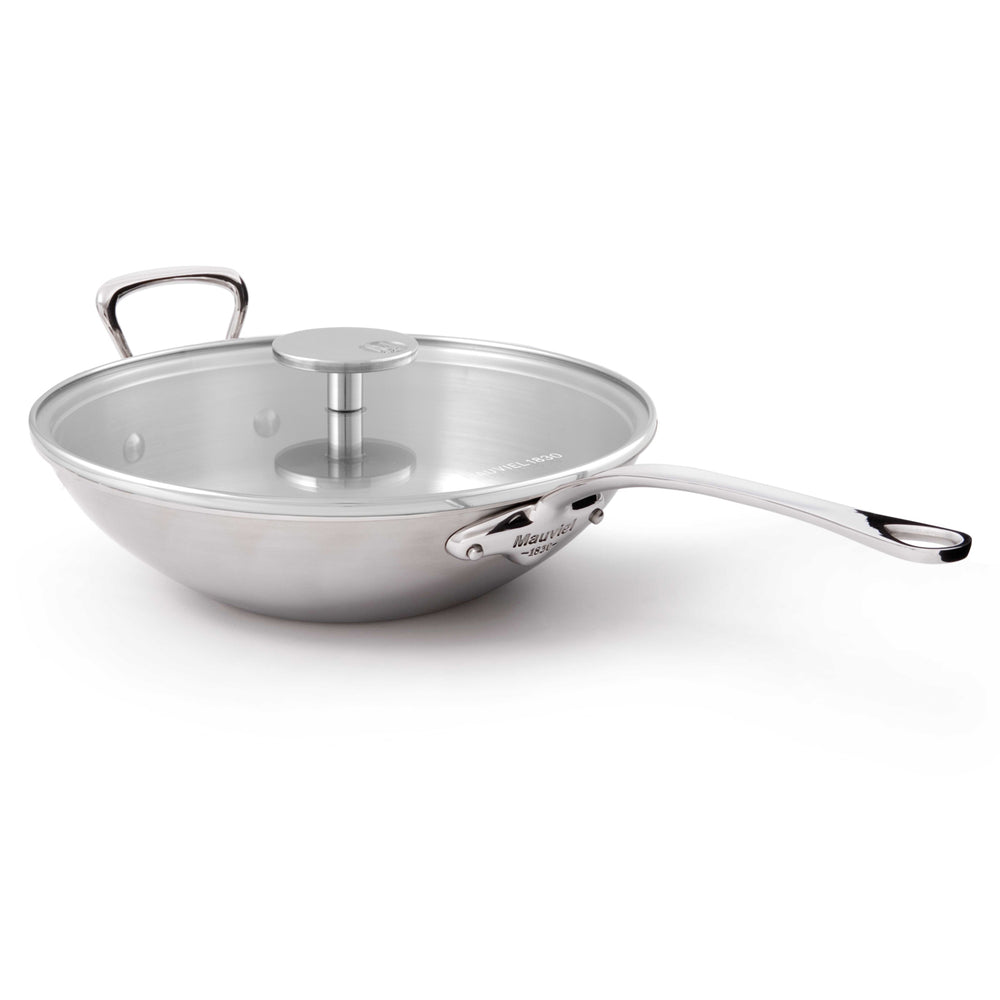
Stainless Steel: Multi-ply stainless steels, such as Mauviel’s M’Cook range, or Hestan’s ProBond or Nanobond Range, are incredibly heat responsive, making them great options for wok cooking. They are also easy to lift. However, they won’t impart the same smoky flavour as a carbon steel pan. Shop stainless steel woks here.
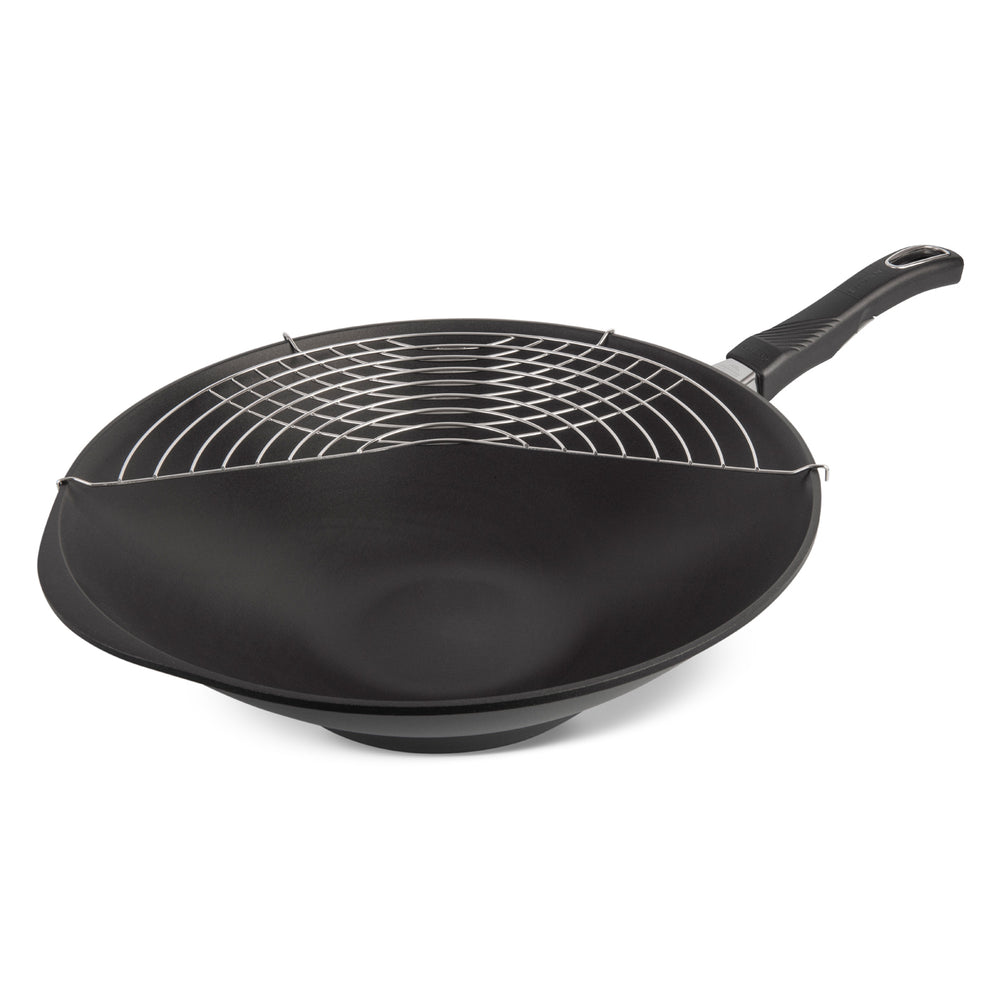
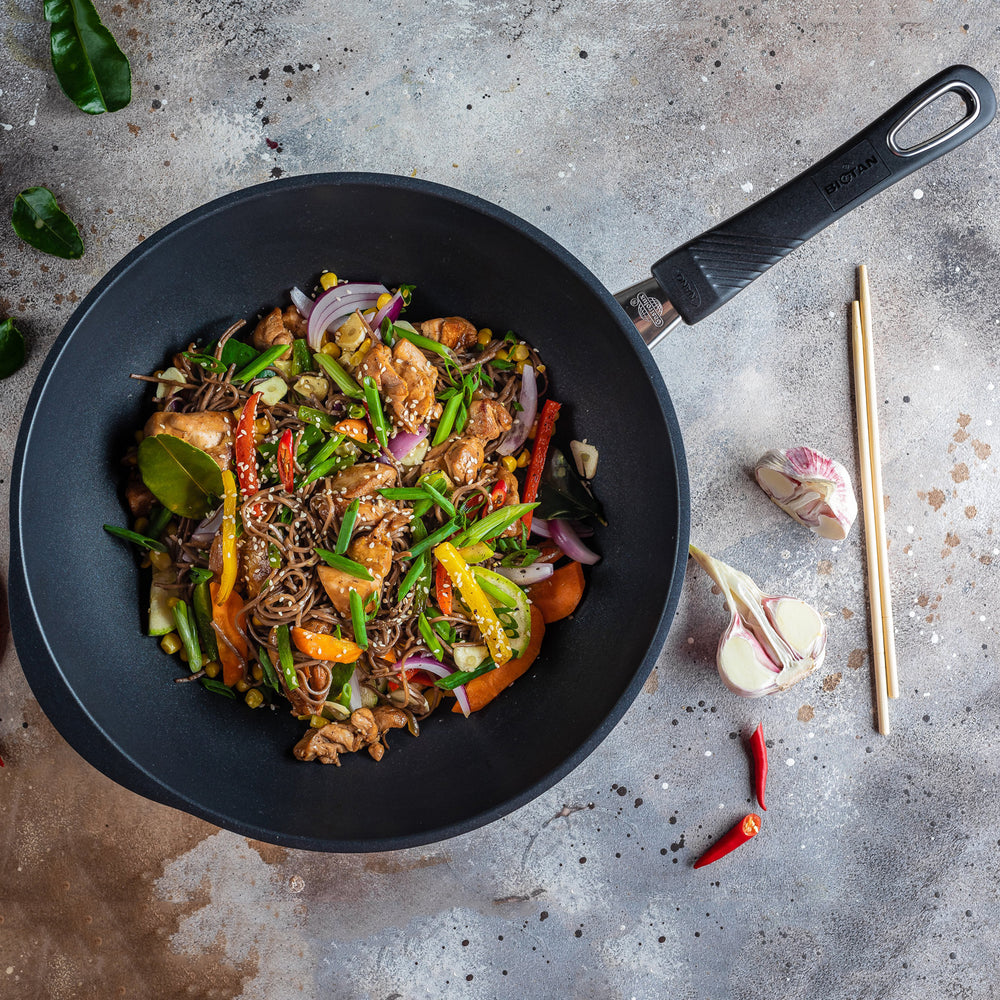
- Non-Stick: We only carry one non-stick wok, from Gastrolux. It’s a great option for cooks who want to use less oil. However, note that non-stick pans – unlike the materials mentioned above – have a limited life span (up to 10 years with proper care), and are not designed for high-heat cooking. Shop Gastrolux non-stick wok here.
FAQs
Are all of your woks induction-compatible?
Yes. Every wok in our collection is selected to work efficiently on induction, gas, and electric hobs. When using a wok on induction, avoid the power or boost setting. Start on a low-medium heat to let the pan expand evenly before cranking it up to a sear – this prevents warping.
How do I season a carbon steel wok?
When you first get a walk, wash and dry it. Place it on the hob over medium heat, and add enough oil to cover the base of the pan. Add some salt and the peels of two potatoes. With tongs, drag the potato peels all over the inside of the pan, ensuring the oil is distributed throughout. Open the windows and turn on the vents; then increase the hob temperature to high as you continue rubbing the oil around the pan. You want the pan to smoke and change colour. Do this for about 10 minutes, then turn off the heat and wait for the wok to cool completely. Once cooled, wash the pan with warm water and dry thoroughly before storing.
For regular maintenance / after every use, wash the wok with warm water. Use salt to rub off any stuck-on bits, if needed; or if you have a strong patina, you can use a scant amount of washing-up liquid. Dry with a tea towel and place the empty wok on the hob. Add very little oil and use kitchen roll to rub the oil all over the pan’s surface. Heat the pan over medium heat until the pan smokes, then turn off the heat and let the pan cool completely before storing. This keeps the patina healthy, while ensuring the pan is dry, preventing rust. In stainless steel, enameled cast iron (Staub), or non-stick wok, yes. In carbon steel or spun iron wok, we recommend avoiding long simmers with acidic ingredients as they can strip the seasoning. However, if you are only cooking these ingredients for a few minutes, it will be fine. A 28cm or 30cm wok is great for one or two people, while anything larger will feed 4 or more.
For a more detailed explanation, read our pan-seasoning guide. Can I cook acidic foods (like tomatoes or lemon) in my wok?
What size wok do I need?