The Ultimate Guide to What Can (and Can’t) Go in the Dishwasher
‘Can I put it in the dishwasher?’
This is one of the questions our team is asked all the time. And the answer is not always a simple ‘yes’ or ‘no’ – there’s a third, slightly more frustrating answer, which is ‘technically yes, but we don’t recommend it’.
Joe, Manager of our Islington store, explains why: 'Dishwashers, with their combination of intense heat from the drying cycle, harsh detergents, and high velocity water, will wear products much quicker than handwashing.' Some materials stand up well to this (the ‘yes’ group), while others might tarnish (the ‘no’ group), or it will have a negative effect on function, quality, and durability (the ‘we don’t recommend it’ group). Hand washing, by contrast, is much gentler, and the contact with water is more limited. When in doubt, hand wash.
We put together this definitive guide – drawing on the collective expertise of our team – which tells you why a particular kitchen tool is a yes, no, or ‘best to avoid’ for the dishwasher.
This is one of the questions our team is asked all the time. And the answer is not always a simple ‘yes’ or ‘no’ – there’s a third, slightly more frustrating answer, which is ‘technically yes, but we don’t recommend it’.
Joe, Manager of our Islington store, explains why: 'Dishwashers, with their combination of intense heat from the drying cycle, harsh detergents, and high velocity water, will wear products much quicker than handwashing.' Some materials stand up well to this (the ‘yes’ group), while others might tarnish (the ‘no’ group), or it will have a negative effect on function, quality, and durability (the ‘we don’t recommend it’ group). Hand washing, by contrast, is much gentler, and the contact with water is more limited. When in doubt, hand wash.
We put together this definitive guide – drawing on the collective expertise of our team – which tells you why a particular kitchen tool is a yes, no, or ‘best to avoid’ for the dishwasher.
What You Should Never Put in the Dishwasher
It’s much easier to memorise what cannot go in the dishwasher than what can. We put together this handy cheat sheet of five things that should never go in the dishwasher.
-
Knives (or Any Tool With a Sharp Blade): Any tool that has a delicate edge, like a culinary knife or bladed tool (mandolines, cheese graters, etc), will dull with dishwasher use. It will also weaken the attachment between the blade and handle.
-
Pans That Need Seasoning: Such as cast iron, carbon steel, and spun iron pans.
-
Pans With Reactive Metals: Copper, aluminium, and brass react to heat quickly, which is usually a good thing. But they react to dishwashers quickly, too, and that is not a good thing! If a multi-ply stainless steel pan has unsealed rims (exposed aluminium or copper at the edge), it should not be put in the dishwasher.
-
Natural Wood: Any kind of natural wood – whether it’s present in a pan or table cutlery or chopping board – will absorb steam, causing the grain to swell, warp, and eventually crack or split.
- Pans or Tools with Non-Stick Coatings: The abrasive nature of dishwasher tablets acts like scourers on non-stick cookware, causing them to flake or prematurely lose their easy-release properties.
Pots & Pans
To assess the dishwasher-friendliness of pans, you have to consider the material it is made from.
'Can I Put Stainless Steel Pans in the Dishwasher?'
Short Answer: It Depends.
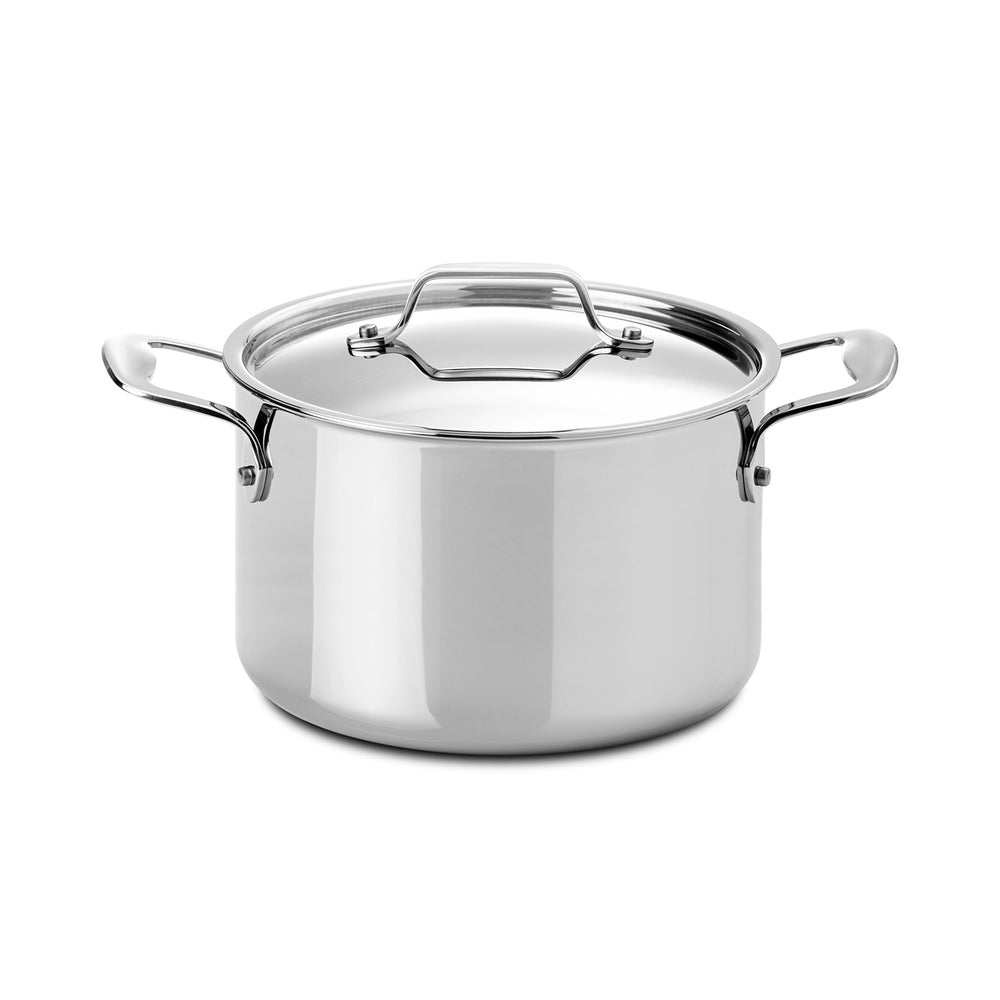
Long Answer: If a stainless steel pan is clad or multi-ply (layered with different metals) – as most of the pans we carry at Borough Kitchen are – then it needs to have sealed rims in order to be dishwasher-safe. When there is no seal, then the heat-conducting method within the stainless steel layers – aluminium or copper, typically – are exposed to the dishwasher’s consistent heat, harsh detergents, and speed of water, which will A) cause it to tarnish, and B) cause the edge to sharpen over time, which makes it less user-friendly.
Long Answer: If a stainless steel pan is clad or multi-ply (layered with different metals) – as most of the pans we carry at Borough Kitchen are – then it needs to have sealed rims in order to be dishwasher-safe. When there is no seal, then the heat-conducting method within the stainless steel layers – aluminium or copper, typically – are exposed to the dishwasher’s consistent heat, harsh detergents, and speed of water, which will A) cause it to tarnish, and B) cause the edge to sharpen over time, which makes it less user-friendly.
'Can I Put Cast Iron, Carbon Steel, or Spun Iron Pans in the Dishwasher?'
Short Answer: No.
Long Answer: Any pan that requires seasoning – a layer of polymerised oil that makes a pan stick-resistant over time – cannot be placed in the dishwasher, because the detergent will remove that layer, which takes time and effort to put on. Another reason it is bad is because prolonged contact with water will cause iron and carbon steel (which is a type of iron) to rust. (If a pan was accidentally placed in the dishwasher, worry not – the pan can be re-seasoned at home.)
'Can I Put Enamelled Cast Iron Pans in the Dishwasher?'
Short Answer: We don’t recommend it.
Long Answer: Though the glass-like enamel coating protects the iron from rusting, we recommend hand-washing enamelled cast iron pans (like Staub) to preserve the pan’s colourful, polished appearance, and to prevent chipping.
'Can I Put Non-Stick Pans in the Dishwasher?'
Short Answer: No.
Long Answer: Any pan labeled non-stick, whether that’s a Gastrolux frying pan or non-stick baking pan, should not be put in the dishwasher, even if it is labeled dishwasher-safe. It could cause the coating to crack or flake off, and weaken its non-stick properties.
'Can I Put Copper Pans in the Dishwasher?'
Short Answer: Absolutely not.
Long Answer: Copper is a highly reactive material that should never encounter the harsh environment of a dishwasher. The combination of high heat and abrasive detergents triggers rapid oxidation, which strips the metal’s natural lustre and leaves it dull, pitted, or tarnish-streaked – and very, very difficult to polish back into shame. Furthermore, the intense pressure and chemical salts can degrade the delicate internal linings, whether that’s traditional tin or modern stainless steel, which make copper pans food-safe. So whether you're washing copper cookware or any other kitchen tool with copper, do it by hand.
'Can I Put Aluminium, Brass, or Bronze in the Dishwasher?'
Short Answer: No.
Long Answer: Though we don’t carry aluminium, brass, or bronze pans at Borough Kitchen, these materials are sometimes used to make handles or the inner metal of pans (such as in the M'CookB, M'150B, or M'200B ranges). If a pan contains these metals – and has unsealed rims – they should not be put in the dishwasher because they will tarnish.
'Can I Put Ceramics (Porcelain, Stoneware, Etc) in the Dishwasher?'
Short Answer: Yes!
Long Answer: Ceramic pans – which includes porcelain, stoneware, and earthenware – are almost always dishwasher-safe. Just make sure that they are 100% ceramic and not integrated with a different material.
Knives & Chopping Boards
'Can I Put Kitchen Knives in the Dishwasher?'
Short Answer: No.
Long Answer: Culinary knives are precision instruments that the dishwasher's harsh environment can quickly degrade. The high-heat drying cycle can compromise the temper (hardness) of the steel, while aggressive detergents and physical agitation against the rack will prematurely dull a sharp edge. The intense moisture causes knife handles to swell, crack, or loosen its rivets. To maintain a razor-sharp edge and structural integrity, a quick hand-wash and immediate dry after every use will keep a knife shipshape.
'Can I Put Chopping Boards in the Dishwasher?'
Short Answer: It depends on the material.
Long answer: If your chopping board has any natural wood in it, then no, as the dishwasher will cause the wood to crack and split. However, if your chopping board is made from wood composite (like our best-selling Borough Kitchen Chopping Boards), they have been treated to be dishwasher-friendly.
Tools & Gadgets
When it comes to the vast world of kitchen gadgets, from garlic presses to citrus juicers, it’s worth noting that ‘dishwasher-safe’ is not the same as ‘dishwasher-friendly’. Here are a few guidelines for deciding whether a tool is worth putting in the dishwasher.
-
Be Aware of Aluminium: Many mechanical gadgets, like ice cream scoops or meat tenderisers, are made of cast aluminium. The high-alkaline salts in dishwasher tablets cause a chemical reaction that leaves a messy, grey-black oxidised residue on the tool (and your hands). While this can be scrubbed off, it’s best to avoid putting aluminium in the dishwasher altogether.
-
Be Aware of Parts with Multiple Materials: Any tool constructed from multiple materials is worth hand-washing, because the different materials will react to the dishwasher differently, causing the mechanism that attaches the materials together to disintegrate. The glue could weaken, or moisture could get trapped in its hinges.
-
Protect Sharp Blades: The high-pressure water jets and abrasive detergents of a dishwasher 'rounds off' the razor-sharp etched edges of any grater or blade, making your zesters and graters more difficult to use. You will extend the longevity of these tools by hand-washing them.
- Check Gaskets and Seals: Tools with rubber or silicone gaskets, such as the lids of containers, can become brittle or warped in the high heat. This compromises the airtight or watertight seal that makes the tool useful in the first place.
Tableware
Most tableware is designed to be dishwasher-safe, but there are some things worth noting.
-
Glassware: To keep your glassware, especially delicate wine glasses, brilliant and cloud-free, the secret lies in controlling heat and mineral build-up. Cloudiness is often caused by etching, a permanent surface erosion triggered by overly hot water and aggressive detergents. To prevent this, always use a dedicated glass or low-temperature cycle (ideally below 50°C) and ensure your dishwasher’s rinse aid is topped up to help water sheet off the surface before it can dry into spots. For the safest wash, ensure glasses are securely tethered in the rack so they don't vibrate against one another, which is the primary cause of hairline cracks and chips.
-
Cutlery: Stainless steel cutlery, including butter knives, are dishwasher-safe, but you should avoid crowding so they can be properly cleaned. (Steak knives are best hand-washed, to maintain sharpness.) Cutlery made of pure silver or gold should always be hand-washed. If cutlery has some resin as part of its design (such as Cutipol Goa or Cutipol Ebony), we recommend opening the door after the dishwasher cycle is over and leaving it ajar, to allow the steam to escape.
- Ceramics: While ceramics (porcelain, stoneware, earthenware) are generally safe for the dishwasher – especially Jars ceramics – do take note if your pieces have places where they are unglazed, and look for the specific instructions of that item. Because unglazed ceramics are more porous, they are more likely to absorb moisture unevenly and develop fine cracks.
If you're looking for dishwasher-safe cookware, start with our collection here.