How Can You Tell When a Knife Is Sharp?
There is a lot of (rightful) confusion around what it means to sharpen a culinary knife. That's because the act of sharpening a knife is actually a two-step process: First you sharpen a blade, then you hone it. You can hone a knife without sharpening it, but not the other way around. When a blade has been sharpened but not honed, it will catch and drag along ingredients rather than cut them properly, as well as shorten the lifespan of a knife.
Below, we've broken down the difference between sharpening and honing a knife. Once you understand that, you can discern whether your knife blade needs sharpening and honing, or just honing. The easiest way to diagnose what a blade needs is by doing the tomato test (instructions below).
What Is Sharpening?
Sharpening is the process of removing metal from the blade to restore its V-shaped edge, which naturally becomes rounded over time.
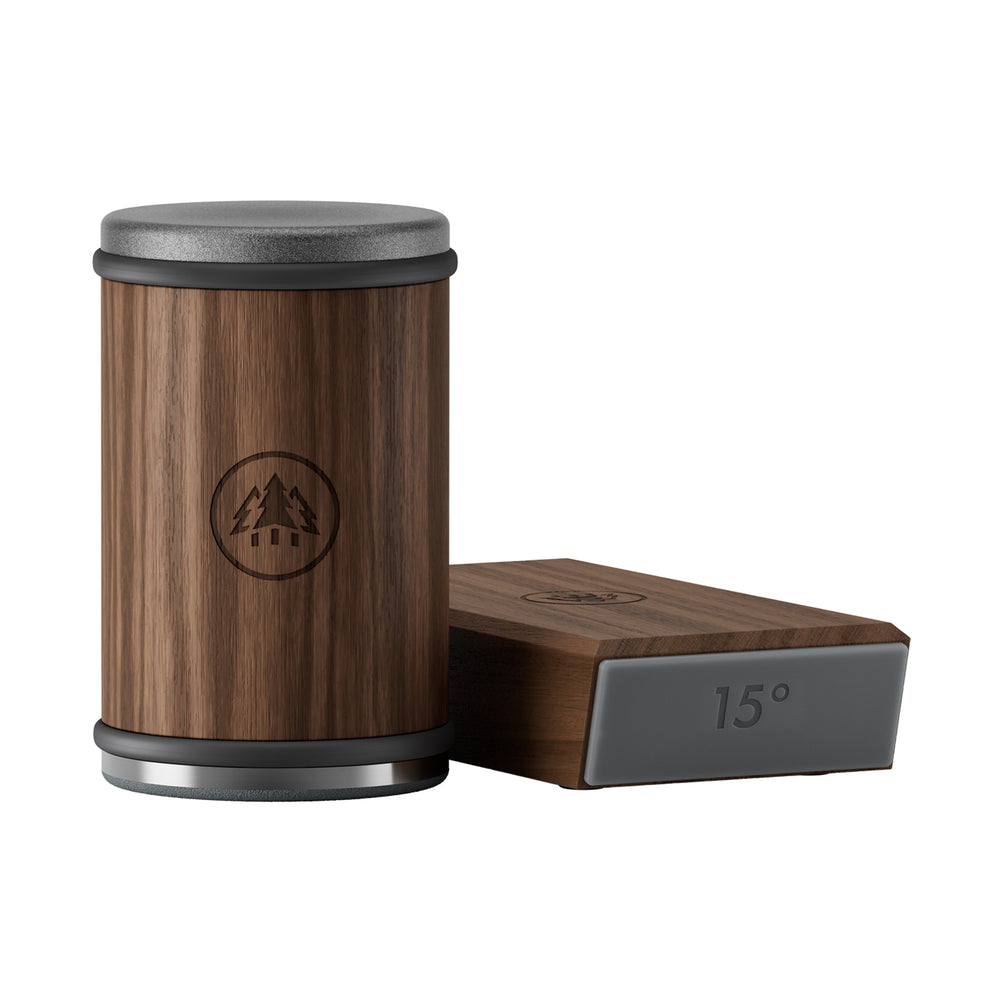
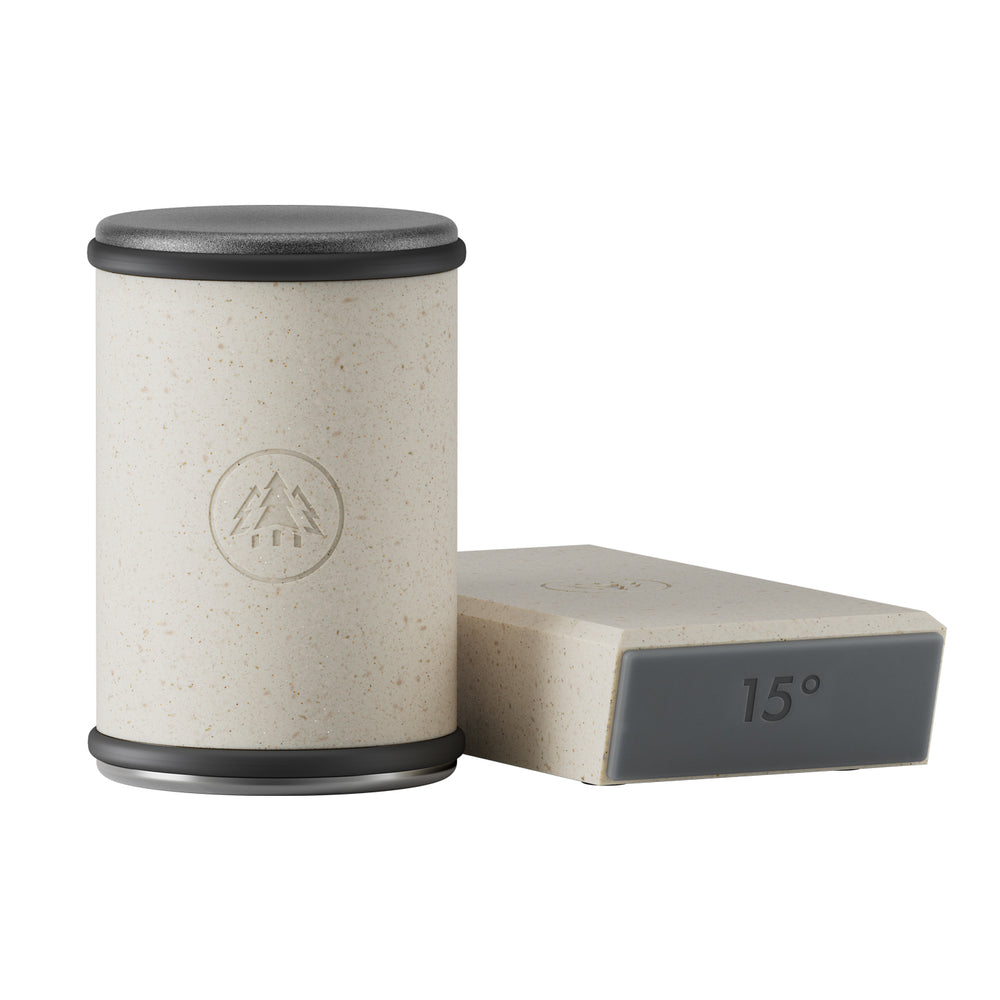
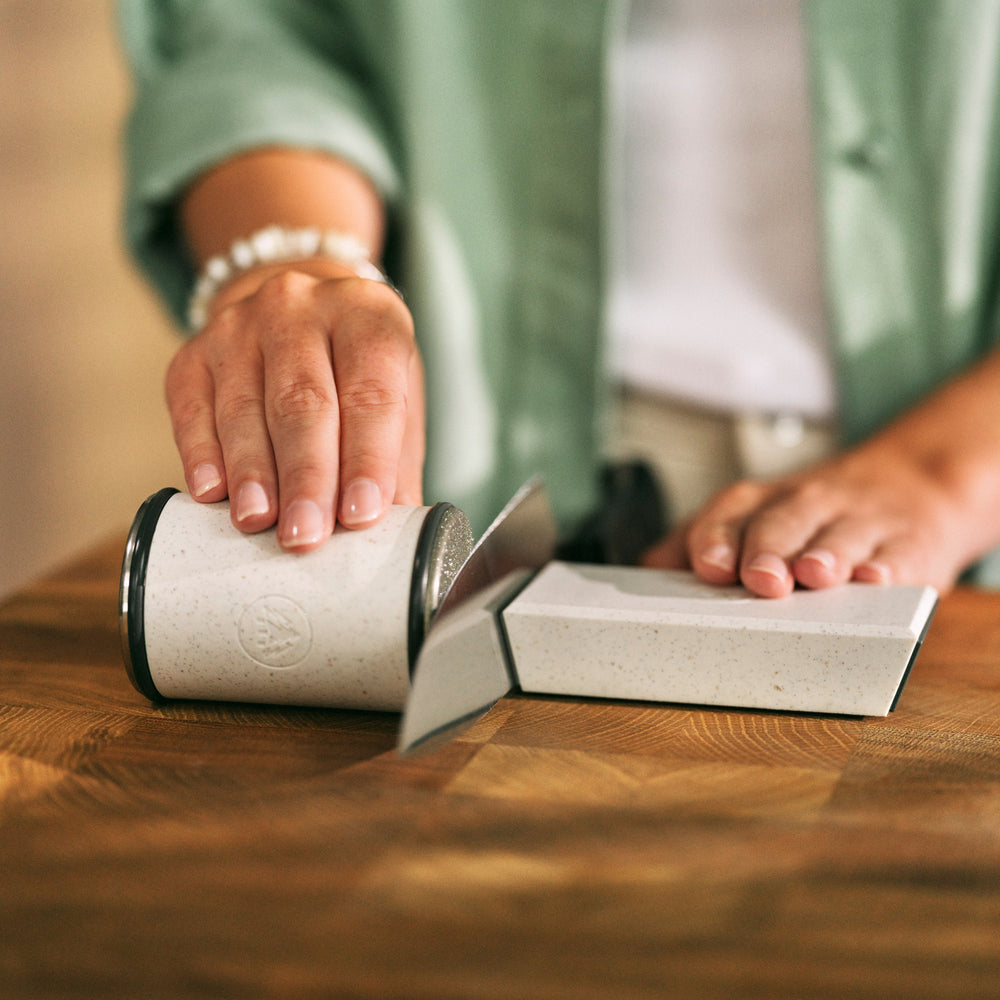
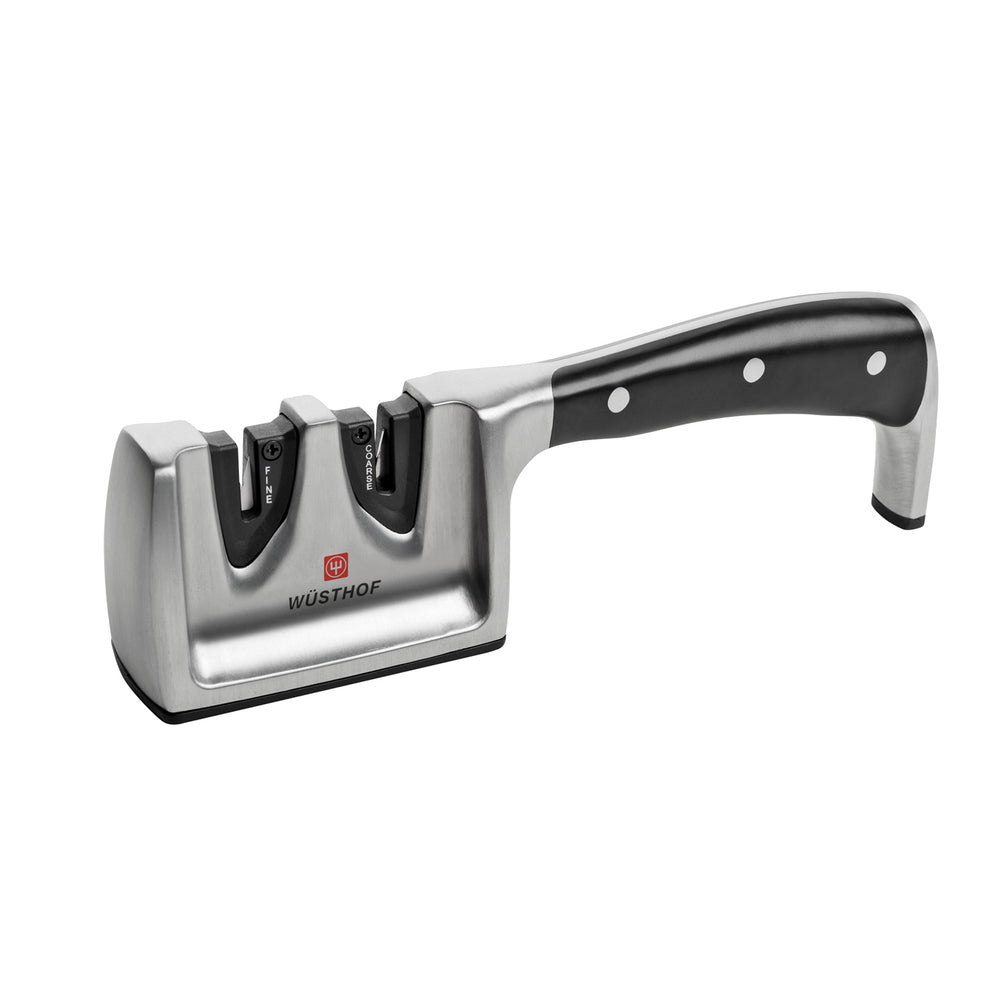
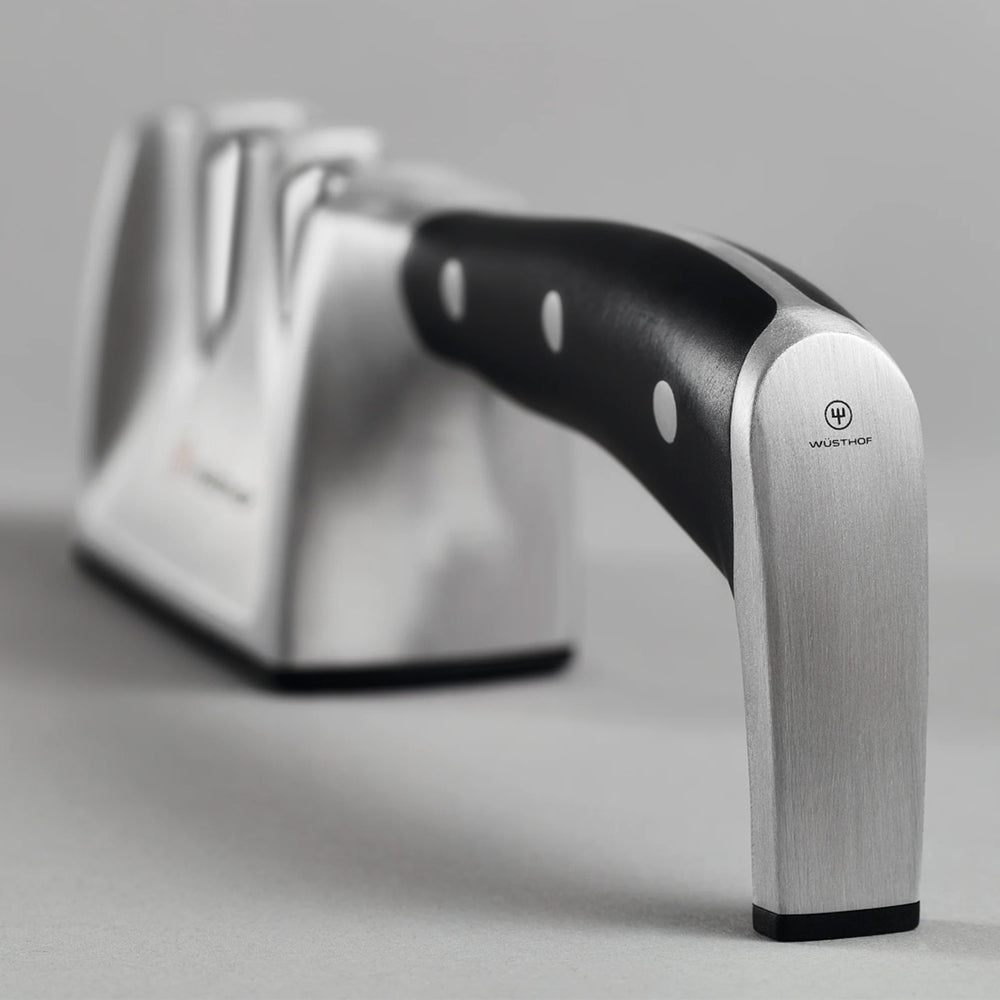
How to Sharpen: If you're using a rolling knife sharpener like the HORL, you roll the coarse sharpening disc against both sides of the knife’s edge. If you're using a combination whetstone, stroke both sides of your knife blade against the coarse side of the stone. If you're using a pull-through knife sharpener, pull it through the sharpening setting.
How Often You Should Sharpen: Most home cooks only need to sharpen a knife a few times a year. If you are a frequent cook, once a month is a good standard.
What Is Honing?
Honing a knife doesn't remove metal. Instead, it straightens the microscopic 'teeth' of the blade that have bent over during daily use.
How to Hone: If you're using a rolling knife sharpener like the HORL, roll both sides of your knife’s edge against the HORL fine honing disc. If you're using a combination whetstone, stroke both sides of your knife blade against the fine side of the stone. If you're using a pull-through knife sharpener, pull it through the honing setting, or use a honing rod.
How Often You Should Hone: Honing should be done frequently to keep the edge in good working shape. Once a week is recommended to maintain a smooth cut.
The Tomato Test
To test whether a knife is sharp, slice a tomato. A tomato is a great natural stress test for a blade because the skin is tough, but the inside is soft and watery. A sharp knife should glide through the skin without requiring too much downward pressure. It should cut slices without the tomato releasing too much water.
To start, place a tomato on your chopping board and slice it using a gentle amount of pressure.
To start, place a tomato on your chopping board and slice it using a gentle amount of pressure.
- If the blade slides across the skin without biting in, or if you have to crush the tomato to get the cut started, your edge is completely dull. Another telltale sign is if the tomato juice spills all over the board and makes a mess. The V-shape of the blade has rounded off and needs a full reset. In this case, you need to sharpen and hone a knife.
- If the knife catches the skin and feels like it is tearing the skin rather than neatly slicing it, and the tomato releases some juice, the blade is sharp but misaligned. In this case, you need to only hone the knife.
- If the blade requires very little pressure to create a clean, paper-thin slice without deforming the fruit, your knife is in peak condition.
Please note that the sharper your knife is, the safer it is to use. That's because blunt blades cause the knife to slip. (For a practical education on how to use knives properly, consider taking a knife skills class at our London cook school.)