5 Expert Tips for Cooking Whole Fish at Home
The most rewarding way to cook (and eat) fish is to ditch pre-packaged fillets and buy whole fish instead, as nature intended. It’s one of those chef-y flexes that will elevate your home cooking tenfold.
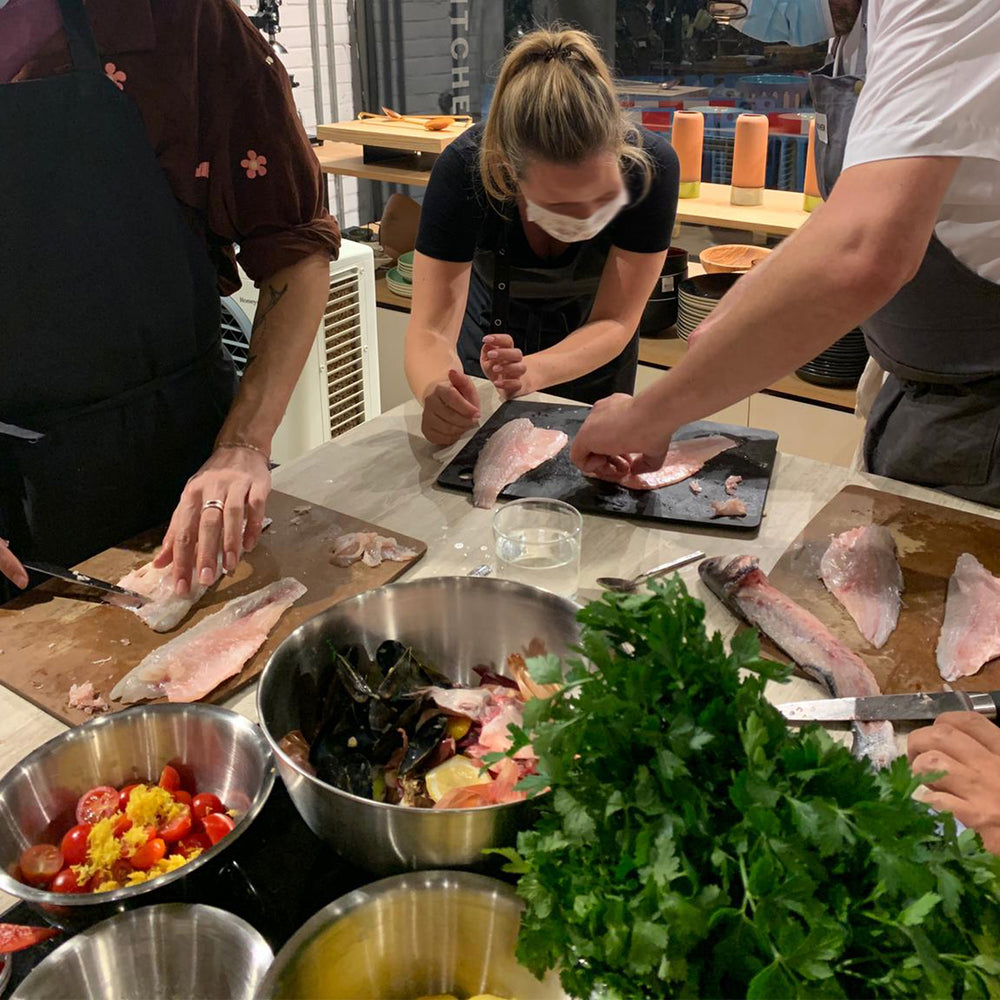
To help you dive in, we asked John, our Head of Cook School, to share a few essential tips for preparing fish at home. Consider it a taster of what you’d expect at the ever-popular Whole Fish 101 class at our London cook school. (To peruse our cook school calendar, click here.)
To help you dive in, we asked John, our Head of Cook School, to share a few essential tips for preparing fish at home. Consider it a taster of what you’d expect at the ever-popular Whole Fish 101 class at our London cook school. (To peruse our cook school calendar, click here.)
1. Look at the Gills
When shopping for fish – at your local fishmonger, ideally – don’t just look at the scales; look at the gills. They should be intact and a vibrant, bright red. This is the single best indication of a fresh catch. If they are dull or brown, keep walking. (In our Whole Fish 101 cooking class, we run through the other five key signs of freshness.)
2. Line-Caught Fish Tastes Better, Too
It isn't just about sustainability, though that’s a major factor. Fish caught individually with a rod and hook experience significantly less stress than those caught in large trawler nets, which cause significant lactic acid buildup (amongst other things). This results in a firmer texture and cleaner flavour in fish, while being much better for the environment.
3. Dry Fish = Crispy Skin
Fish should be as dry as possible before it encounters heat. Not only does this inhibit bacterial activity, but it is also the key to crispy skin when pan-fried. Here’s the rule: When you get home, thoroughly pat the cavity and skin of the fish dry with a sheet of kitchen roll before storing in the fridge. If you want to be a real pro, leave it on a wire rack, uncovered and away from the other food in your fridge for at least two hours to dry it out further.
4. Treat Your Fish Like Steak or Chicken
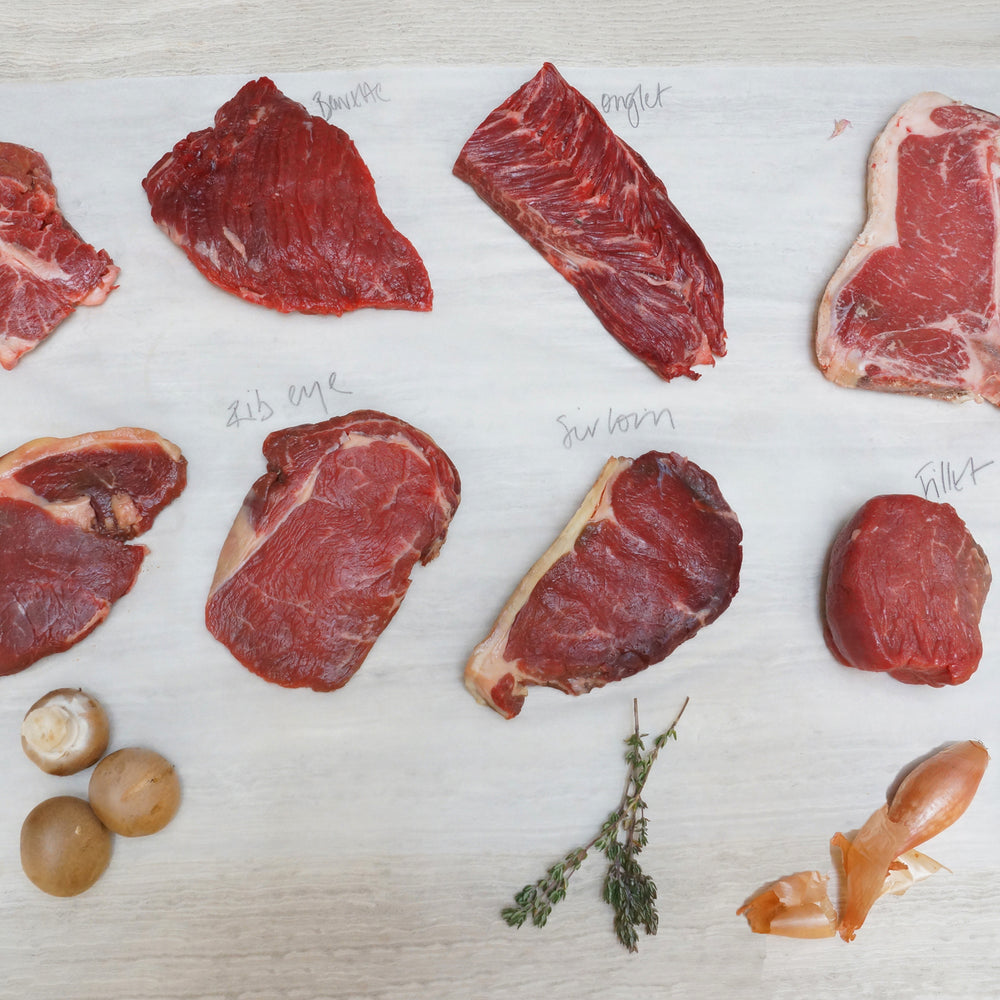
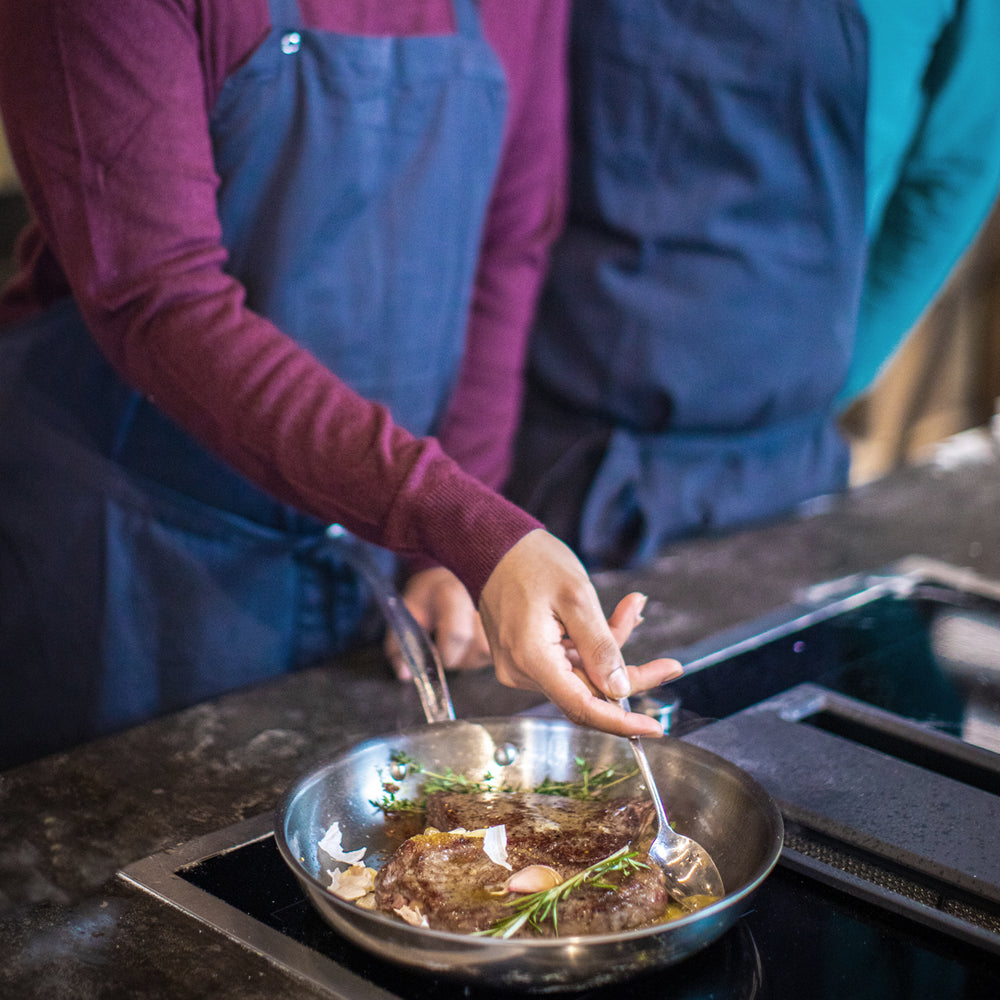
We often forget that fish is a protein that reacts to heat, not unlike a rib-eye steak. Intense heat causes the proteins to seize up, pushing all the natural juices toward the centre of the fish. If you cut into the fish immediately, those juices drain away. Instead, rest your fish on a warm plate for two or three minutes after cooking. This allows the protein to relax and the juices to redistribute more evenly, ensuring every bite is succulent.
5. Cook Fish on The Bone When Possible
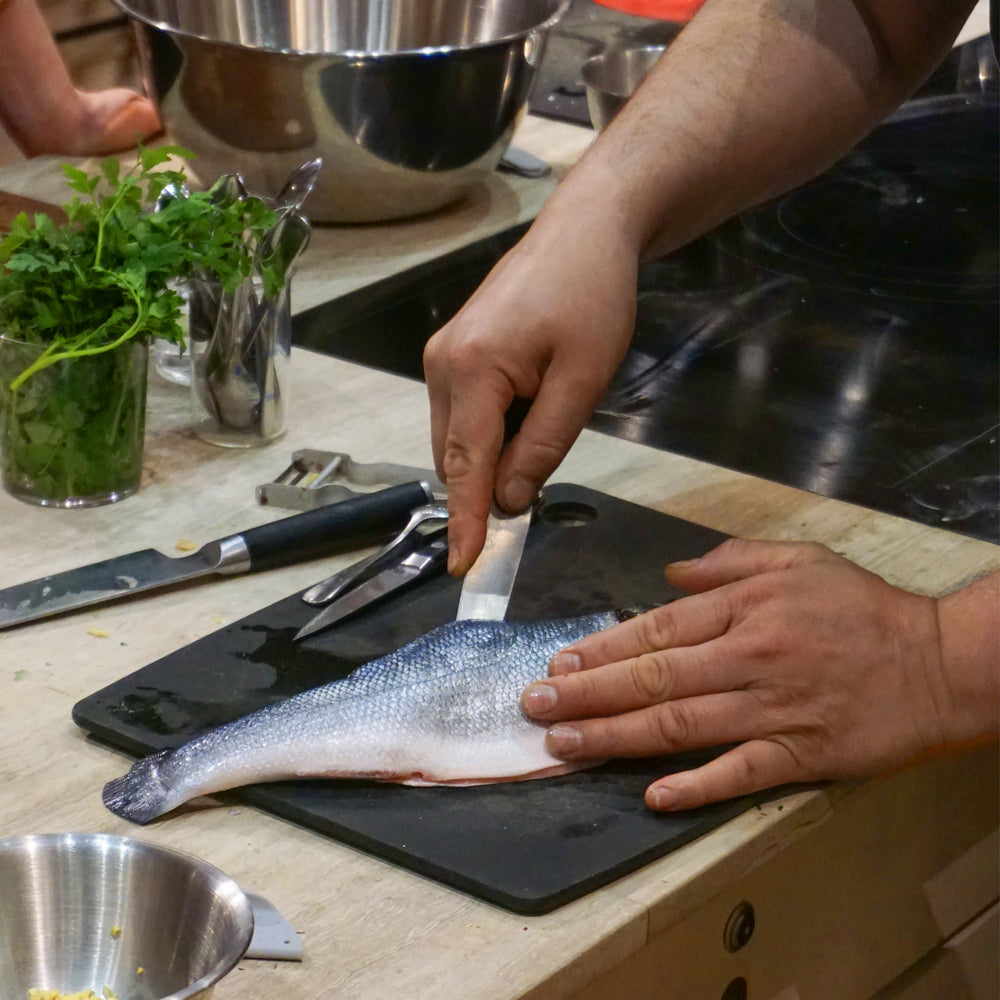
Cooking fish bone-in isn’t just for aesthetics. The bones regulate the heat distribution inside the fish, giving you much more control over the internal temperature. The result is a consistently moist, flavourful fish that is far harder to overcook than a thin fillet. (For a practical, hands-on guide to taking flesh off the bone, take our Whole Fish 101 cookery class – it will give you lifetime-lasting confidence.)
Ready to Become a Fish Expert?
Understanding the theory is one thing – getting your hands on whole fish is another. In our London cook school, we teach three different fish and seafood cookery classes: Whole Fish 101, Shellfish 101, and South Indian Seafood.
To explore our full range of cook school classes, click here. If you already know which class to take, find the ideal date on our London cook school calendar. To buy a cook school gift card (for one or two guests), click here.
To explore our full range of cook school classes, click here. If you already know which class to take, find the ideal date on our London cook school calendar. To buy a cook school gift card (for one or two guests), click here.